


 25.06.2026 12:56 AM
I would like to emphasize that everything said in this review is merely my assumption. The American currency has been steadily rising for a full week. While the initial strengthening of the dollar seemed like a logical reaction to the Fed meeting, doubts are now emerging...
On the one hand, the wave pattern fully supports a rise in the dollar due to the need to build wave C on a larger scale. On the other hand, many traders are used to the news background having a significant impact on currency market movements. What should we make of the events of the past week? The news is not good enough for the dollar to see consistent demand every day. Will the Federal Reserve raise rates in 2026? This question will remain relevant throughout the summer. The market believes this at present, but if the next inflation reports indicate a slowdown in price growth, the FOMC will have no grounds for tightening monetary policy.
Moreover, the tightening measures are unlikely to be long-term. Stabilizing inflation is urgently needed. This is not the anticipated cycle of rate hikes from 2021-2022, when inflation approached 10%, compelling the Fed to raise rates to 5.5%. Currently, we are dealing with a short-term shock caused by the global energy crisis stemming from the war in the Middle East. Therefore, it can be assumed that inflation will decline, and the FOMC may limit policy tightening to one or two rounds. Given all of the above, I do not believe that expectations of the Fed's tightening are the reason for the dollar's weekly growth.
So, what is the reason? Perhaps the truth lies in the upcoming elections? According to recent polls, Donald Trump's approval ratings have fallen to their lowest levels in both of his terms in the White House. Consequently, the likelihood of the Republican Party losing in the elections is extremely high. Trump may lose at least one chamber of Congress and will no longer be able to make decisions independently. Perhaps the market understands this and is waiting for positive changes in the economy, immigration, trade relations with other countries, and other pressing areas? This is certainly just one of many assumptions, but I believe it could relate to reality. Even so, I find it difficult to expect further strengthening of the dollar, as Trump still remains the President of the United States.
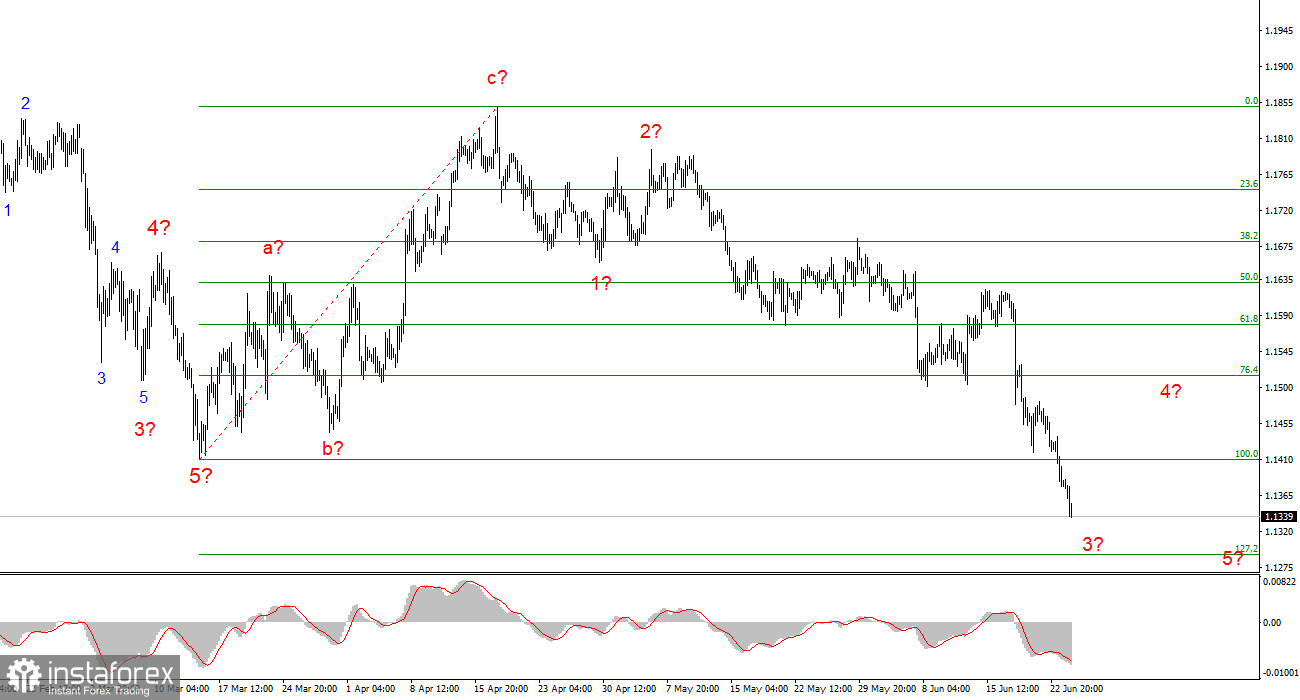
Based on the analysis of EUR/USD, I conclude that the instrument remains within an uptrend segment, while in the shorter term, it is within a downtrend segment. In my opinion, now is a decent time to consider forming long positions, but the instrument may drop significantly below the 14,000 level during wave C. If this assumption is correct, it is better to wait a bit, at least for wave 5 in C. Moreover, optimistic geopolitical circumstances no longer provide resistance to the U.S. currency.
The wave pattern for the GBP/USD instrument has become clearer. The instrument has formed three waves down, and the wave structure for EUR/USD has changed, so there are three waves there as well. Therefore, the pound may continue to decline within wave 5 in C after a slight correction within wave 4. One way or another, the downward wave set may conclude soon, and the news background does not provide unconditional support for the U.S. currency. Wave C may soon push prices below the low of wave A.

