
আরও দেখুন


 03.04.2026 12:51 AM
The Tankan quarterly report does not yet show any clear signs of a deterioration in the economic situation due to the war in the Middle East. The business activity index for large enterprises rose for the fourth consecutive time to +17, while for non-manufacturing companies it remained unchanged at a very high level of +36. The forecasts for the next quarter are quite positive, and expected inflation rates have been revised upward. It is clear that the survey was largely conducted before February 28.
The yen reacts very sensitively to news from the Middle East. As soon as rumors of a potential ceasefire emerged, they began to gain strength. Once Iran disavowed those rumors, the yen once again headed towards 160.

The Bank of Japan has repeatedly stated that its monetary policy will be guided by economic rather than political criteria. The next meeting is scheduled for April 27-28, and so far, markets expect an interest rate hike, as many members of the Bank's board are concerned about inflation risks. In the absence of threats to the economy from a potential energy shock, this long-anticipated decision should notably support the yen; however, the direct dependence on oil prices (the higher the oil price, the weaker the yen) combined with a slowdown in physical deliveries may simultaneously trigger an inflationary shock and deliver a critical blow to industry, consumer demand, and consequently GDP growth rates. Investment capital will be in a higher-risk zone, which may intensify the exit of foreign investors from the Japanese market, completely blocking any positive effects from a potential rate increase.
The net short position on JPY decreased by $0.4 billion over the reporting week to -$4.9 billion, with bearish positioning where the calculated price is above the long-term average, and bullish momentum in USD/JPY persists.
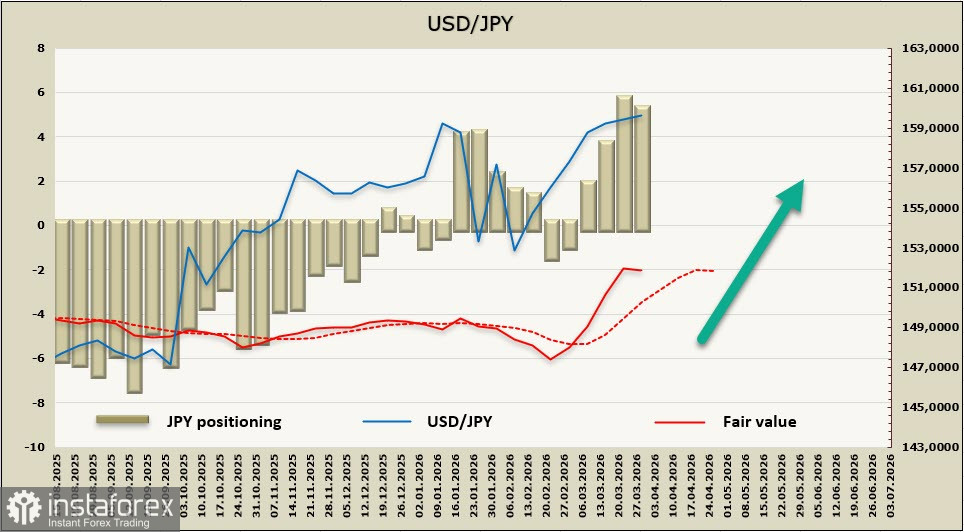
The attempt to break above 160 occurred, as we previously anticipated, but the pair did not move higher. Japan's top currency official, Atsushi Mimura, warned that authorities might need to take "decisive" action if speculative movements in the currency market intensify, heightening fears of intervention.
At present, we see two scenarios for the yen. The fantastic one: the war ends, the Strait of Hormuz opens for movement, demand for the dollar falls, Japan receives oil, and the yen strengthens to 152. The realistic one: the crisis becomes protracted, pressure on the yen intensifies, attempts to reach 161.96 become more persistent, new highs are set, and even the threat of intervention may only slow, not stop, this process.


