
আরও দেখুন


 08.07.2026 01:05 PM
Everything comes with a cost sooner or later. Gold learned that the hard way, retreating from a record $5,600 per ounce in January and shedding nearly a fifth of its value. The trigger for the latest wave of selling was the US Treasury's decision to revoke the sanctions waiver on Iranian oil.
Washington's move automatically raises the risk of a new round of escalation in the energy market. Any rebound in Brent could stoke inflation expectations and convince the Fed that rates need to be kept higher for longer. For gold, which pays no interest, that is a classic headwind. The strengthening of the US dollar that usually accompanies such expectations makes the dollar-denominated metal even less attractive.
According to ING, the precious metal is trading largely in line with shifting expectations about Fed policy. Weak employment data eased fears of aggressive monetary tightening and allowed XAU/USD to settle above $4,000. Investors, however, are not rushing to celebrate — the market is awaiting the minutes of the June FOMC meeting, which could provide clearer signals on the future path of rates.
Dynamics of gold buying by central banks
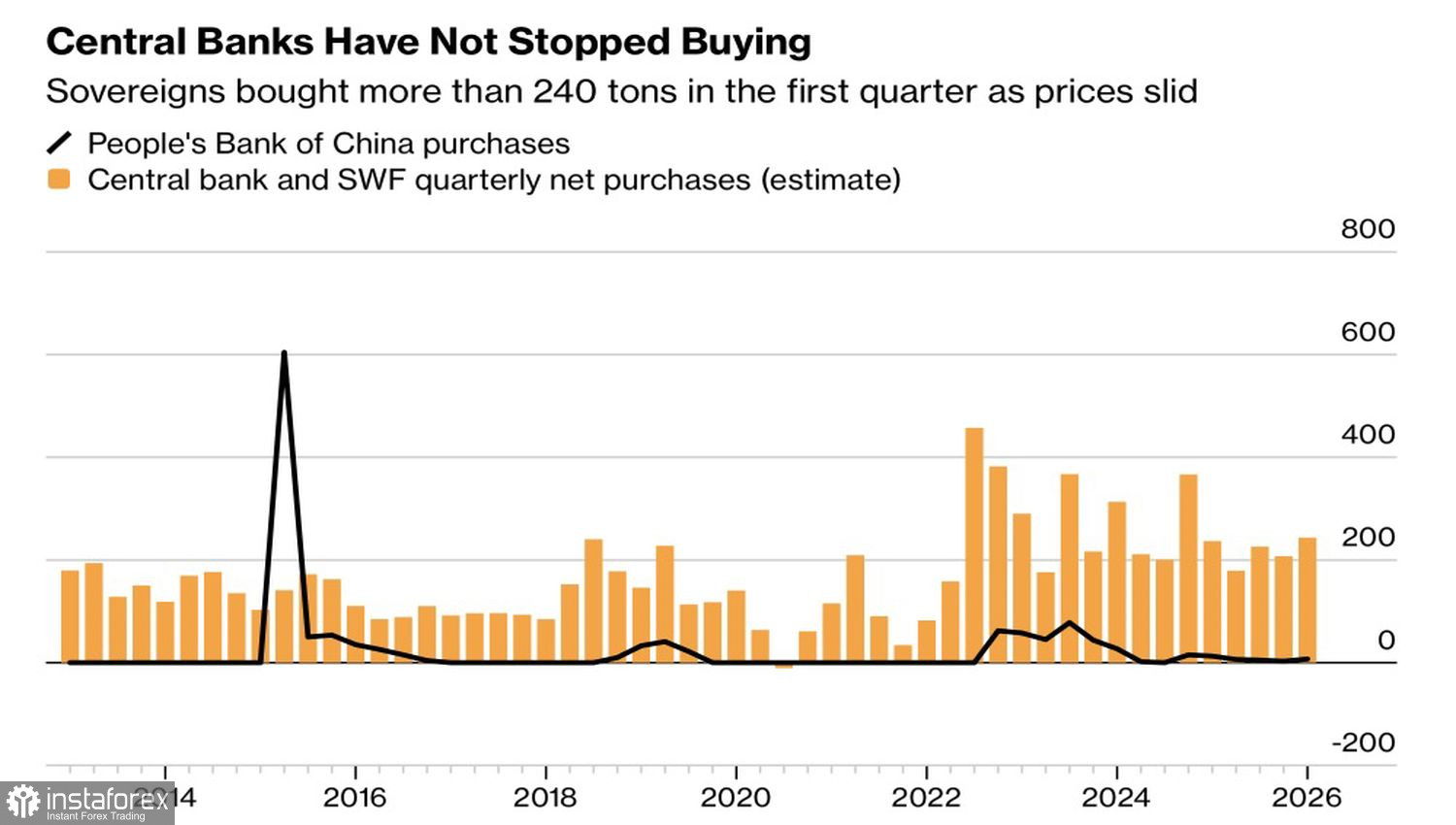
Not all the news for gold is negative. The People's Bank of China bought 15 tonnes of bullion last month — the largest monthly purchase this year and the twentieth consecutive addition to official reserves. The World Gold Council notes that central banks returned to buying in May, with a cumulative net increase of 41 tonnes in official reserves. But that was not enough to offset capital flight by private investors.
Since January, exchange-traded funds tracked by Bloomberg have lost almost $18 billion worth of gold. JP Morgan sharply revised its forecast: instead of the previously expected 400 tonnes of inflows into global ETFs, the bank now expects a net outflow of 50 tonnes by year-end. JP Morgan stresses that its long-term bullish view on the metal remains unchanged — the mix of interest rates and macroeconomic conditions is only temporarily keeping gold in a lower range.
Thus, XAU/USD is caught between central bank support and pressure from Fed rate expectations and a strong US dollar. The shift from euphoria to reckoning is only a transitional phase. For the market to find a bottom and move higher, the US dollar rally needs to run out of steam, and the debasement-trade theme must return to the forefront.
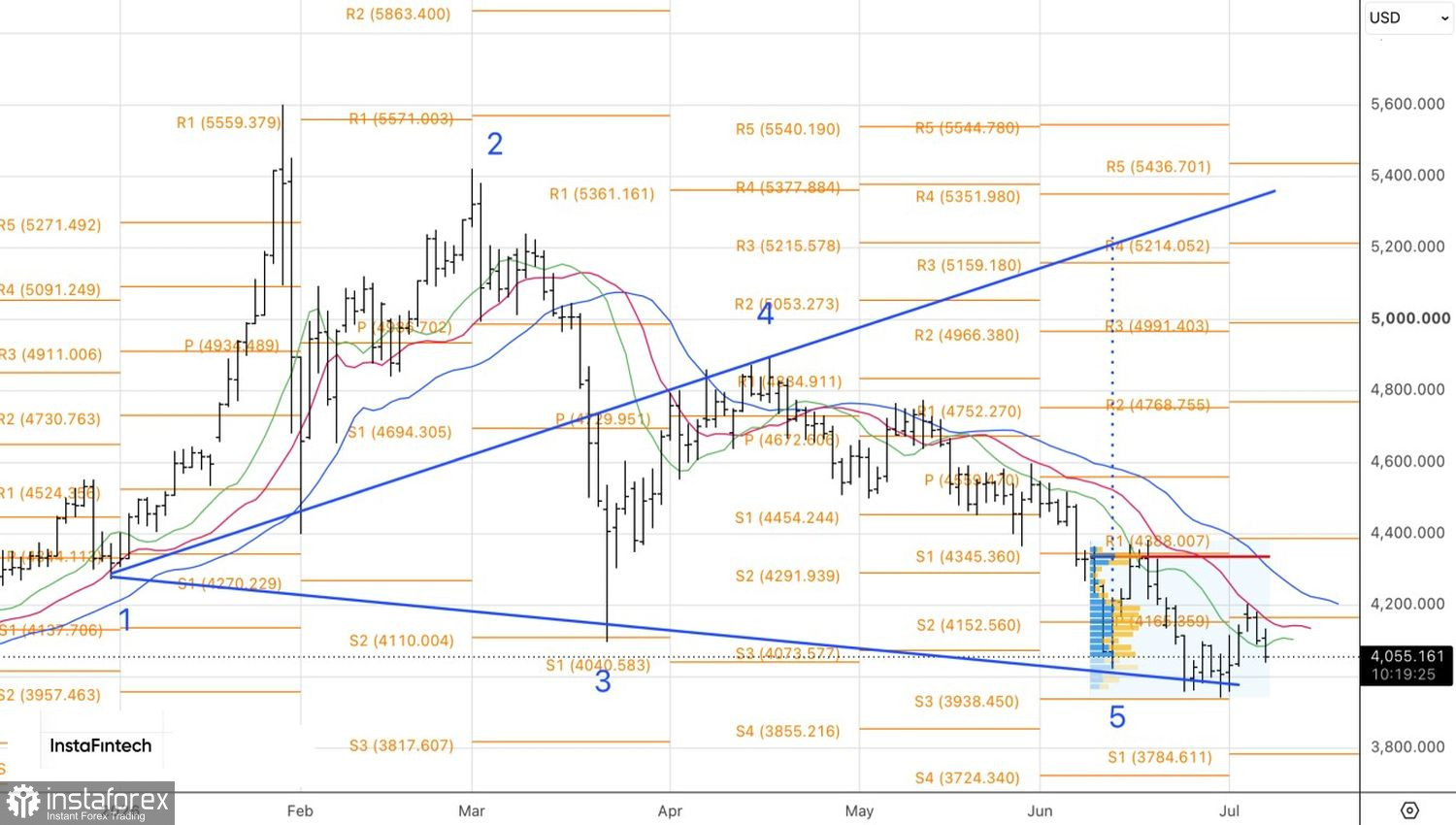
In my view, the FOMC minutes will be another test for gold: a dovish tone will bring buyers back, a hawkish one will push XAU/USD to new local lows below $4,000. Technically, on the daily gold chart, a return above $4,150 would activate 1?2?3 reversal patterns and Wolfe Waves and provide a basis for buying. As long as prices remain below that level, it makes sense to give priority to selling.


