
See also


 27.04.2026 12:41 AM
The U.S. dollar approaches the new week with a less-than-favorable outlook. Its decline has persisted for three weeks. If the geopolitical backdrop remains as it is now or improves, the corrective segments of the trend for both instruments could turn impulsive. Paradoxically, the worse the geopolitical backdrop is, the better it is for the U.S. dollar. Essentially, the only support for the dollar in 2026 is Donald Trump's war in Iran and its consequences.
Next week, the key event in the US will be the FOMC meeting, the last under Jerome Powell's leadership. Most likely, the FOMC will keep interest rates unchanged, and the market is fully prepared for this outcome. It is worth noting that the European Central Bank and the Bank of England were considering interest rate hikes in April, but the Federal Reserve is not. The U.S. labor market remains in a rather contradictory state; it cannot yet be said to be recovering definitively. Therefore, the Fed will not risk tightening policy unless inflation exceeds 4-5%.
The key theme for the upcoming week will remain geopolitics. Despite the fact that Iran and the US cannot even agree on the next round of negotiations, this situation is dangerous for the entire world. Trump may order new strikes against Iran if his financial blockade does not work and Tehran does not accept Washington's terms. Therefore, the current calm may indeed be the calm before the storm. Unfortunately. Among the economic reports, I would highlight the first-quarter GDP report, expected to be around 2.1%, and the ISM manufacturing index.
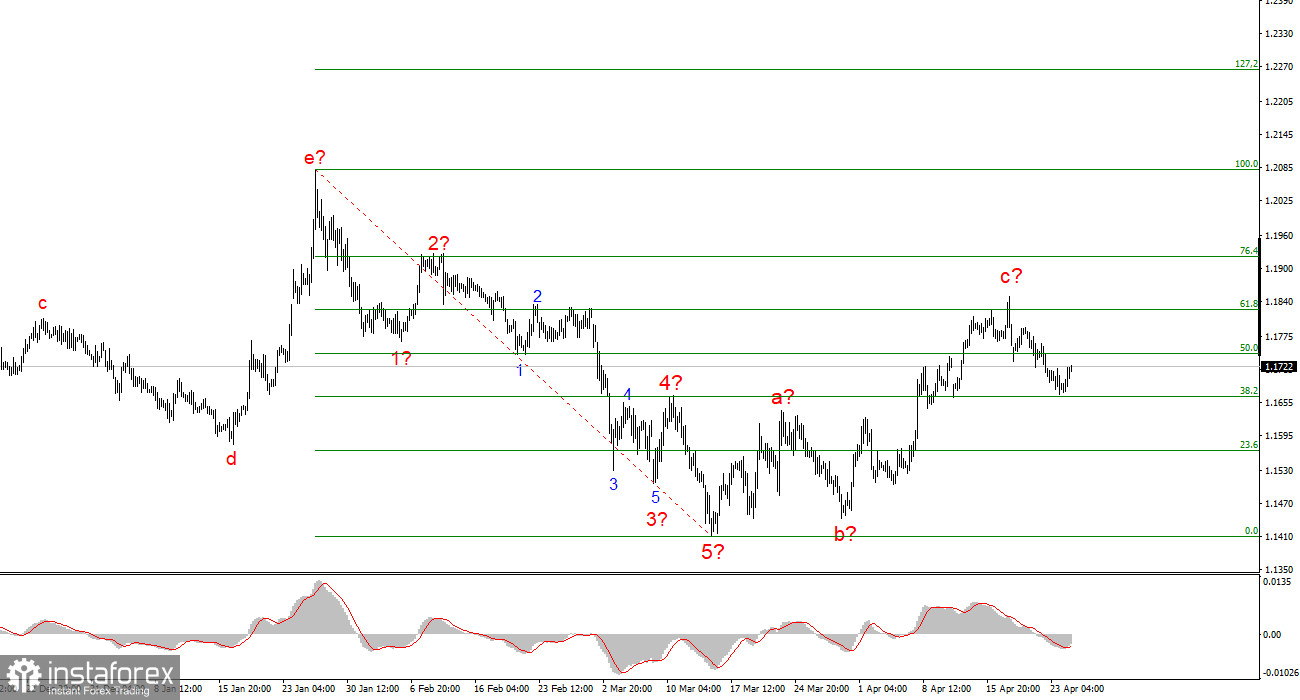
Based on my analysis of EUR/USD, I conclude that the instrument remains within an upward segment of the trend (as seen in the lower chart), while in the short term, it is within a corrective structure. The corrective wave set appears quite complete and may take on a more complex, extended form only if the geopolitical situation in the Middle East improves. Otherwise, I believe that a new downward wave set may begin from the current positions. We have seen the corrective wave, and further movement will depend on negotiations between Iran and the US.
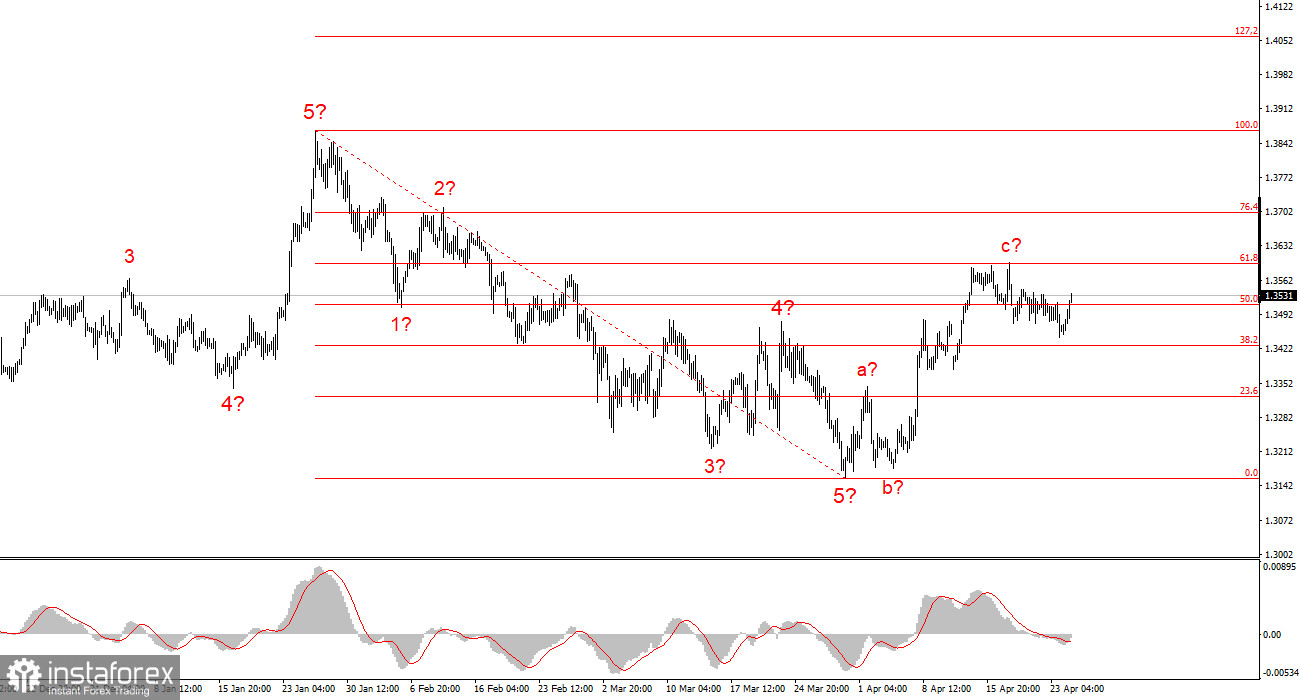
The wave structure of the GBP/USD instrument has become clearer over time, as I expected. We now see a clear three-wave upward structure on the charts, which may already be complete. If this is indeed the case, we can expect the formation of at least one descending wave (presumably wave d). The upward segment of the trend could take on a five-wave form, but for this to occur, the conflict in the Middle East needs to subside, not reignite. Therefore, the base scenario for the coming days is a decline to the 34th figure or slightly below. After that, everything will again depend on geopolitical factors.


