यह भी देखें


 04.03.2026 12:28 PM
The EUR/USD pair is showing limited ability to build on yesterday's rebound from the 1.1530 level — the lowest level seen since November 2025 — and on Wednesday continues to decline for the third consecutive day. Spot quotes have fallen below the 1.1600 level today, remaining under pressure and vulnerable to further losses.
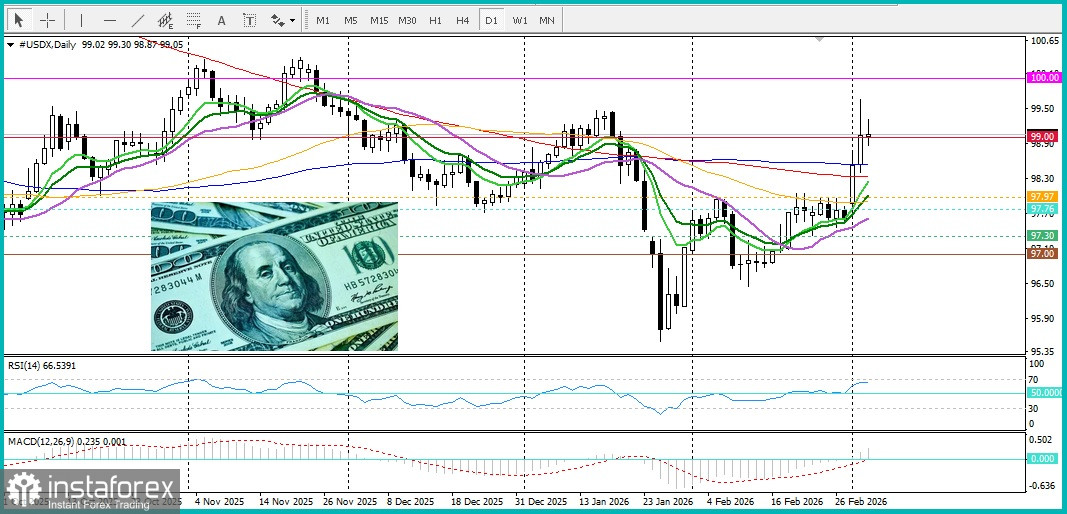
The lack of signs of de-escalation in the large-scale conflict in the Middle East is heightening concerns about the inflationary consequences of a prolonged confrontation. Against this backdrop, expectations for more decisive monetary easing by the Federal Reserve are diminishing, which supports safe-haven demand for the US dollar. The US Dollar Index (DXY), which reflects the performance of the American currency against a basket of major currencies, maintains bullish momentum and remains near the three-month high reached on Tuesday, creating additional pressure on the euro.
Another negative factor for the euro is concern about the impact of a closure of the Strait of Hormuz, which threatens disruptions to energy supplies from a key oil-producing region. Given the European economy's dependence on oil and gas imports, further increases in energy prices could trigger serious economic consequences. This intensifies pressure on the single currency and confirms the short-term downward movement of the EUR/USD pair.
Today, to identify better trading opportunities, attention should be paid to releases from the eurozone, which may provide short-term guidance ahead of US macroeconomic data. Wednesday's US statistics include the ADP private-sector employment report and the ISM Services PMI. Nevertheless, geopolitical developments remain the key driver of investor sentiment, continuing to shape demand for the dollar as a safe-haven asset.
Overall, fundamental factors indicate that the EUR/USD pair maintains a downward trajectory, and in the near term the risks of further euro weakening prevail.
From a technical perspective, the EUR/USD pair is struggling to benefit from yesterday's rebound. Oscillators on the daily chart remain negative. The Relative Strength Index is close to oversold territory, allowing the pair to correct slightly from the February low. However, bulls lack sufficient strength to reach the important 200-day simple moving average. Therefore, at present, bears hold the advantage.
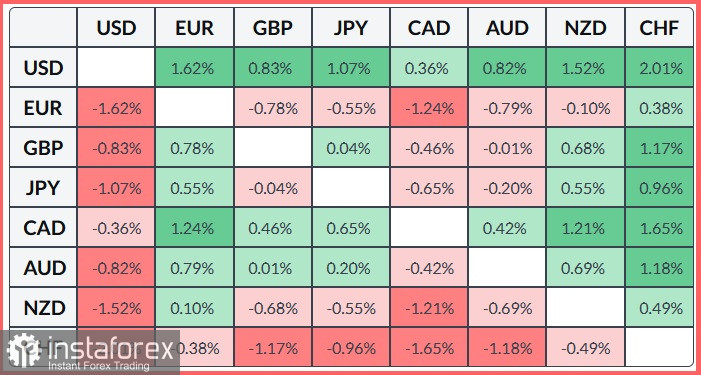
The table below shows the percentage change of the US dollar against major currencies for the current week. The US currency recorded its strongest gain against the Swiss franc.