
Lihat juga


 13.07.2026 09:54 AM
GBP/USD
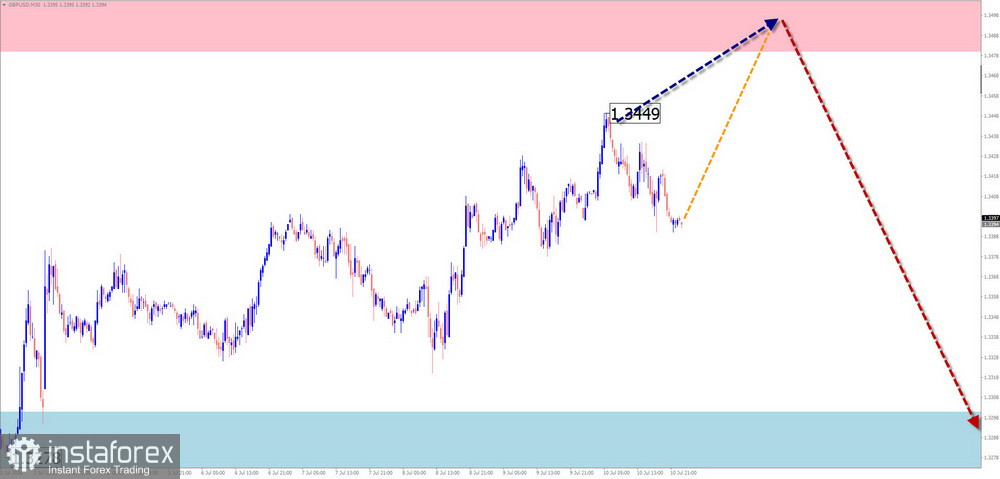
The downward wave that began in January of this year on the British pound chart has been in a corrective phase over the past two months. Since the end of last month, the pair has been rebounding upward from the upper boundary of a strong potential reversal zone. The calculated resistance lies along the lower boundary of the four-hour timeframe potential reversal zone.
Throughout the upcoming week, the British pound is expected to remain within an overall sideways trading range. During the first few days, an upward move is the more likely scenario, with the price rising toward the calculated resistance zone. After that, a reversal is expected, followed by the beginning of a downward move. The highest volatility is likely toward the end of the week.
Resistance:
Support:
Buy positions: are possible on an intraday basis but may be risky.
Sell positions: may be considered after confirmed reversal signals appear near the resistance zone.
AUD/USD
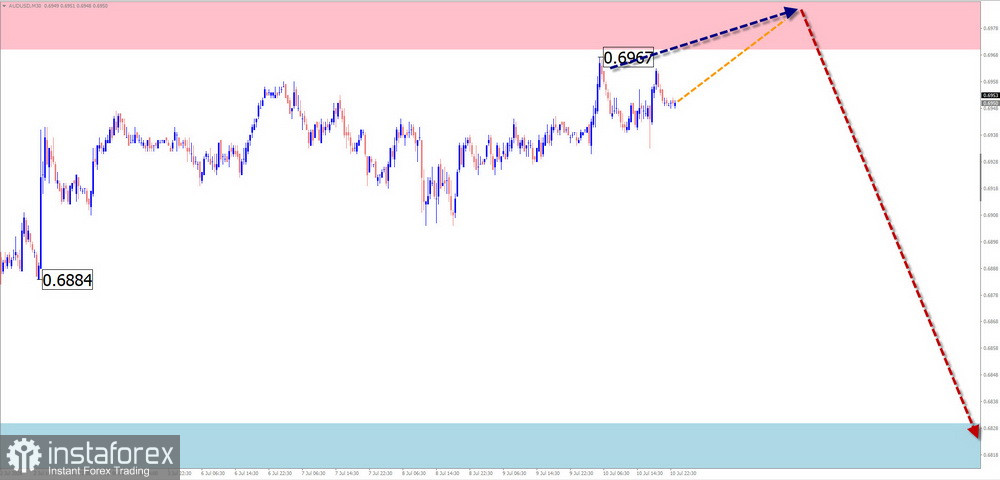
The unfinished downward wave that has been developing since the end of January continues to define the dominant trend on the Australian dollar major pair. Over the past two weeks, an intermediate correction has been forming within the wave structure. At the time of analysis, the price is located near the lower boundary of a broad four-hour timeframe potential reversal zone.
A bullish price bias is expected over the next few days. A brief move above the upper boundary of the calculated resistance zone cannot be ruled out. After testing this zone, a reversal is expected, followed by the beginning of a bearish move.
Resistance:
Support:
Buy positions: have very limited potential and are considered risky.
Sell positions: may be opened with a reduced volume size after confirmed reversal signals appear. The downside potential is limited by the support zone.
USD/CHF
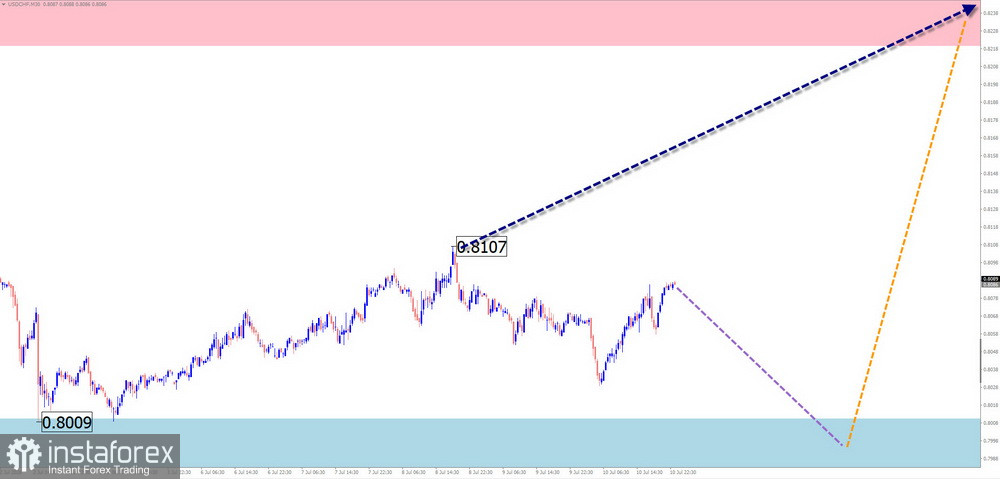
The downward trend that began at the start of this year continues to determine the primary direction of the USD/CHF major pair. Within the final wave (C), an intermediate correction in the form of an irregular flat has been developing in recent weeks. The structure still lacks its final segment. In recent weeks, the price has been trading sideways near the upper boundary of a strong hourly support zone.
At the beginning of the upcoming week, sideways trading is expected to continue. A brief decline toward the support zone cannot be ruled out. After that, a reversal and the beginning of a bullish move are expected. The highest market activity is likely toward the end of the week.
Resistance:
Support:
Sell positions: are risky and have limited potential.
Buy positions: may be considered after confirmed reversal signals appear near the support zone.
EUR/JPY
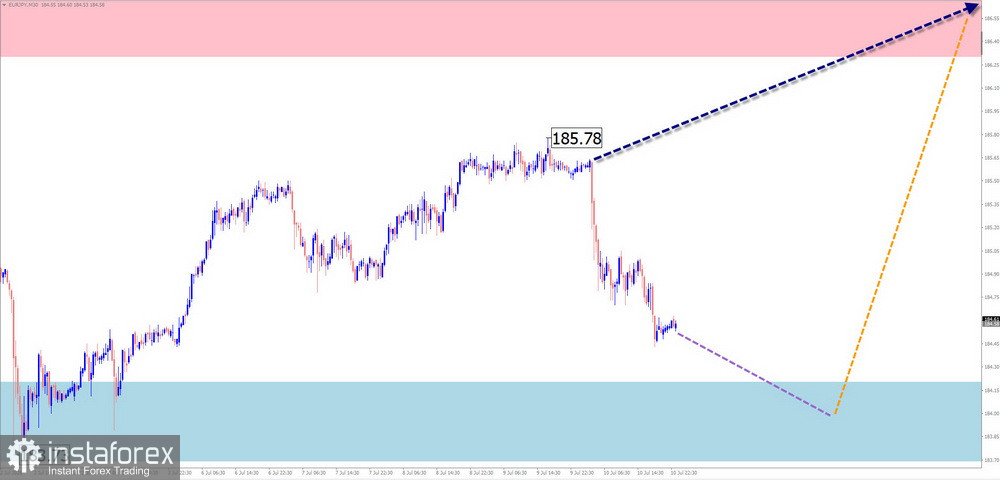
Since the beginning of May, the EUR/JPY pair has been developing an upward wave zigzag within a sideways structure. The current unfinished wave segment has been forming since the end of June. The price is trading between potential reversal zones of different timeframes. The current countertrend movement remains within the bounds of an intermediate correction.
Throughout the upcoming week, the pair is expected to maintain an overall sideways trading bias. During the first few days, a decline toward the calculated support zone is the more likely scenario. Closer to the weekend, a reversal and a resumption of the upward move are expected.
Resistance:
Support:
Sell positions: may be considered during individual trading sessions with a small volume size. It is safer to close positions at the first signs of a reversal.
Buy positions: will become relevant after confirmed reversal signals appear near the support zone.
AUD/JPY
The unfinished downward wave in the AUD/JPY pair that began on March 11 is developing as a horizontal flat pattern. The pair is currently trading within a cluster of potential reversal levels from different timeframes. The wave is in the final stage of its development.
At the beginning of the upcoming week, a downward bias is expected, with the price potentially declining toward the calculated support zone. After that, a reversal and a resumption of the upward move toward the resistance zone are expected. Volatility is likely to increase closer to the weekend.
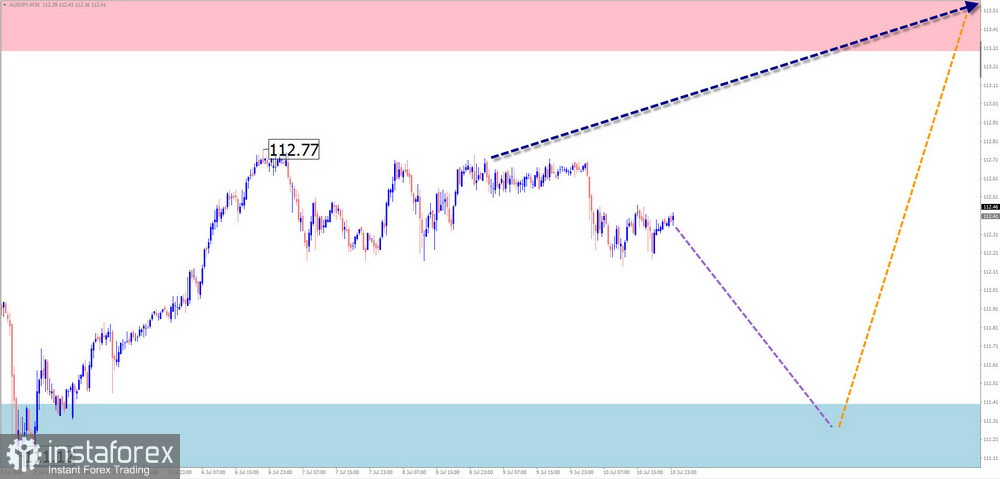
Resistance:
Support:
Sell positions: may be considered during individual trading sessions. It is safer to close positions at the first signs of a reversal.
Buy positions: will become relevant after confirmed reversal signals appear near the support zone.
EUR/GBP
The primary bearish wave has brought the EUR/GBP pair into an area where potential reversal zones from different timeframes converge. At the time of analysis, the wave structure does not appear to be complete. The calculated support lies along the upper boundary of the potential reversal zone.
During the upcoming week, the pair is expected to reverse direction. Once the current downward move is completed near the support zone, a reversal and the beginning of an upward move are expected. Volatility and trading activity are likely to increase closer to the weekend.
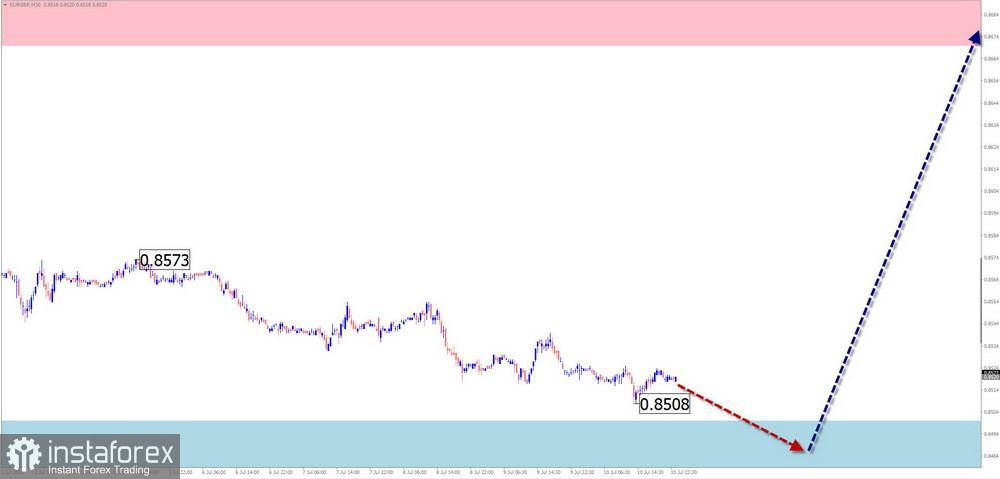
Resistance:
Support:
Sell positions: have limited potential and are considered risky.
Buy positions: will become relevant after confirmed reversal signals appear near the support zone.
Explanation
In Simplified Wave Analysis (SWA), every wave consists of three parts (A-B-C). On each timeframe, the latest unfinished wave is analyzed. The dashed lines indicate the expected price movements.
Attention: The wave algorithm does not take into account the duration of price movements over time.


