
Lihat juga


 17.08.2026 10:20 AM
The market is pricing everything in, except its own calm—and that very calm now looks suspiciously convincing. The S&P 500 closed higher for a third consecutive week, posting its longest winning streak since May, and the VIX fear index fell to its lowest level since December 29. The technology-heavy Nasdaq 100 eased slightly, but that change does not alter the picture: market breadth, traders say, remains constructive, and the rally continues to grind higher with less fanfare and with far more participation than expected.
However, reasons for concern have not disappeared. Retail sales in the United States fell by the most in more than a year, signaling a loss of momentum in consumer spending after a strong first half. Consumer sentiment, according to the University of Michigan, declined for the first time in three months. The dollar and bonds felt the impact first: equities fell, while oil, conversely, was buoyed by the threat of new economic measures against Iran—rising energy prices are already being factored into inflation expectations and into sentiment in the derivatives market.
Earnings per share dynamics for S&P 500 companies
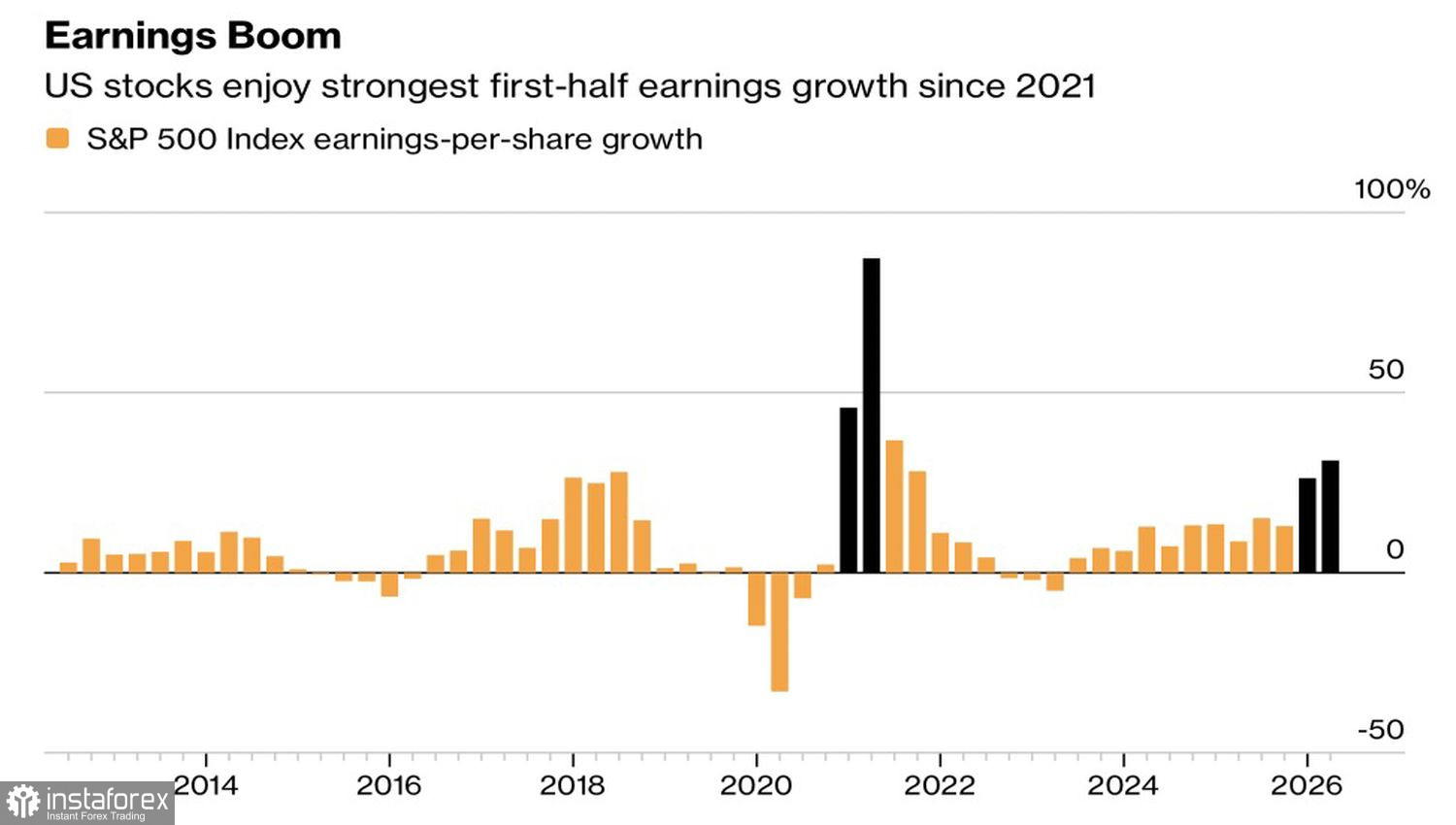
In fact, the market is living two parallel narratives at once. On one side is consumer fatigue; on the other is corporate America, which has delivered the best profit growth outside of post-crisis rebounds since 1992. Large technology companies reported a 31% increase in profits in the second quarter, with more than 90% of constituents in the broad index already having reported. Analysts attribute this to the rollout of artificial intelligence and the resilience of the US economy in the face of an energy shock, including a jump in oil prices related to the war.
Still, earnings growth is outpacing the index itself. The S&P 500 profit margins are approaching 16% from a prior 14%, and strategists' average year-end target for the index has been raised to 7,894 points—only about 1% above current record levels. At the same time, the forward price-to-earnings multiple, P/E, has fallen to roughly 22 from 26 at the start of the year, when sky-high valuations dominated market concerns. The prevailing view on Wall Street is that the market has had a good reset and that valuations are attractive.
Expected S&P 500 reaction to key events
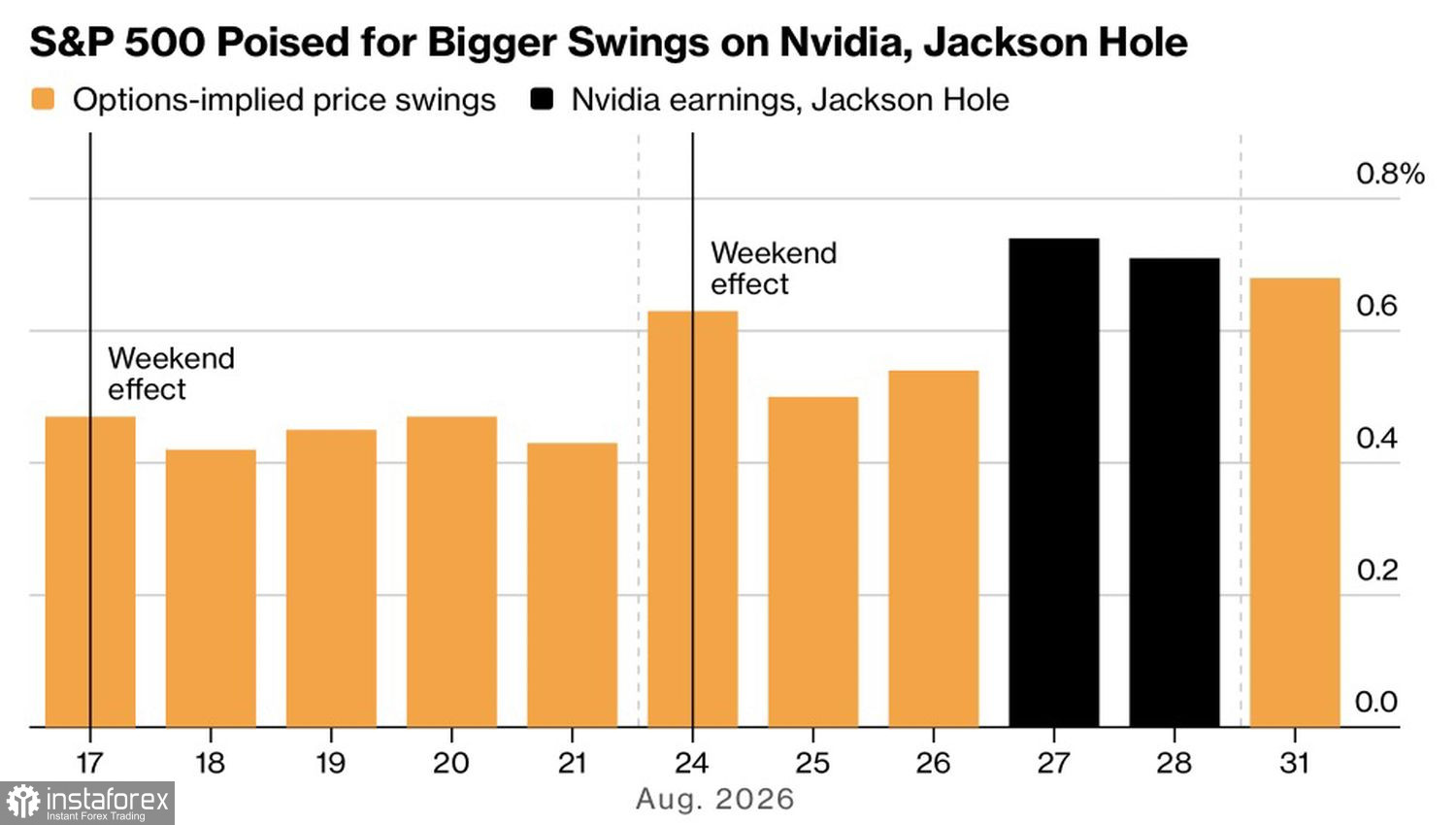
The S&P 500 volatility curve hints that traders are relatively calm about upcoming risks and do not expect surprises ahead of Nvidia's report and the Jackson Hole symposium, and the Cboe index ended the week at its lowest level of the year. The market is pricing daily index moves of less than 0.8% through the end of the month—a nearly soothing figure for August.
Quiet rarely comes for free. Is it too early for the market to relax?
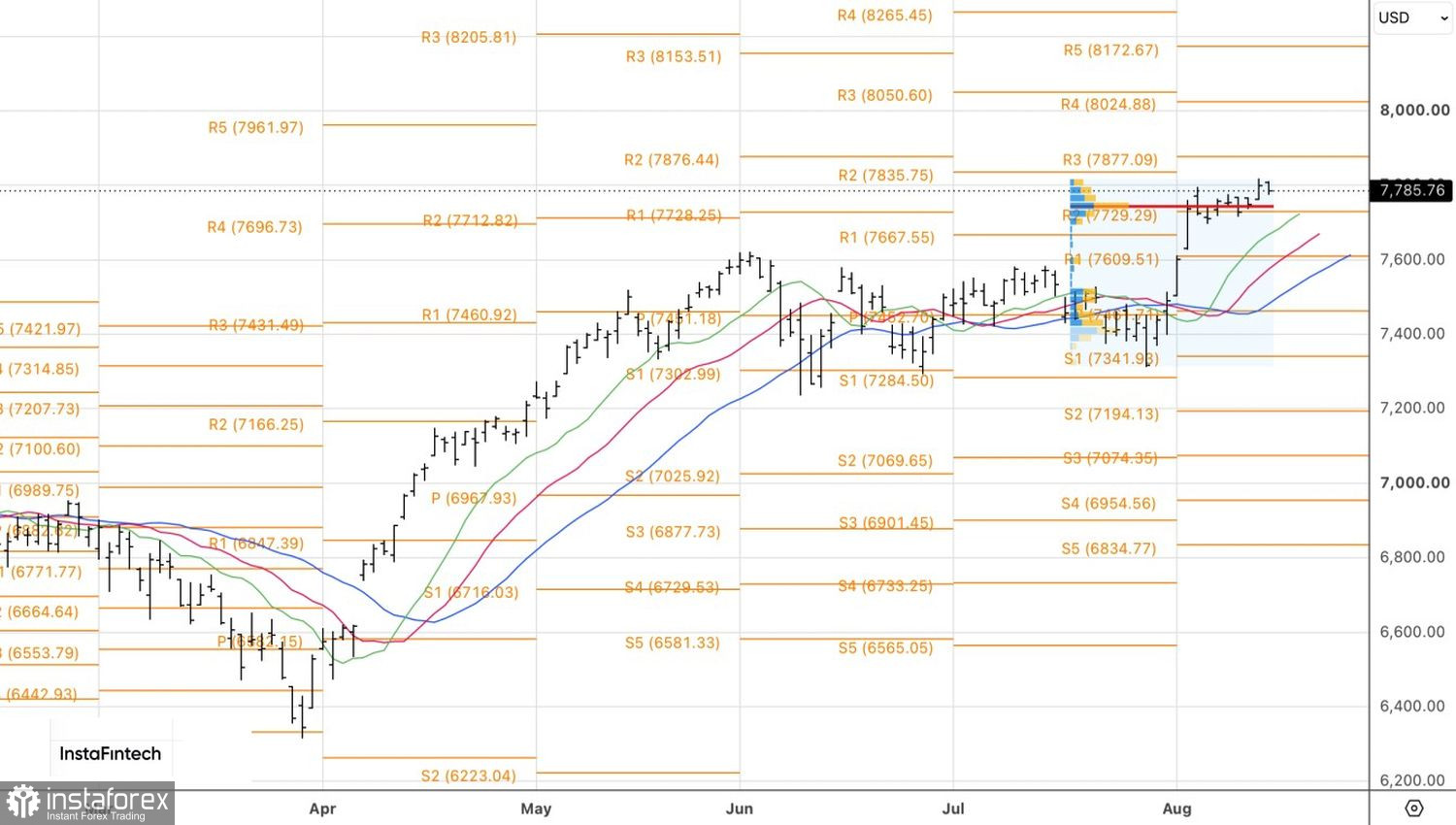
Technically, on the daily chart, the S&P 500 is trading above a fair-value level at 7,745 that indicates that bulls remain in control. As long as that level is not breached to the downside, it makes sense to keep focus on buying.


