
Veja também


 25.08.2026 04:05 AM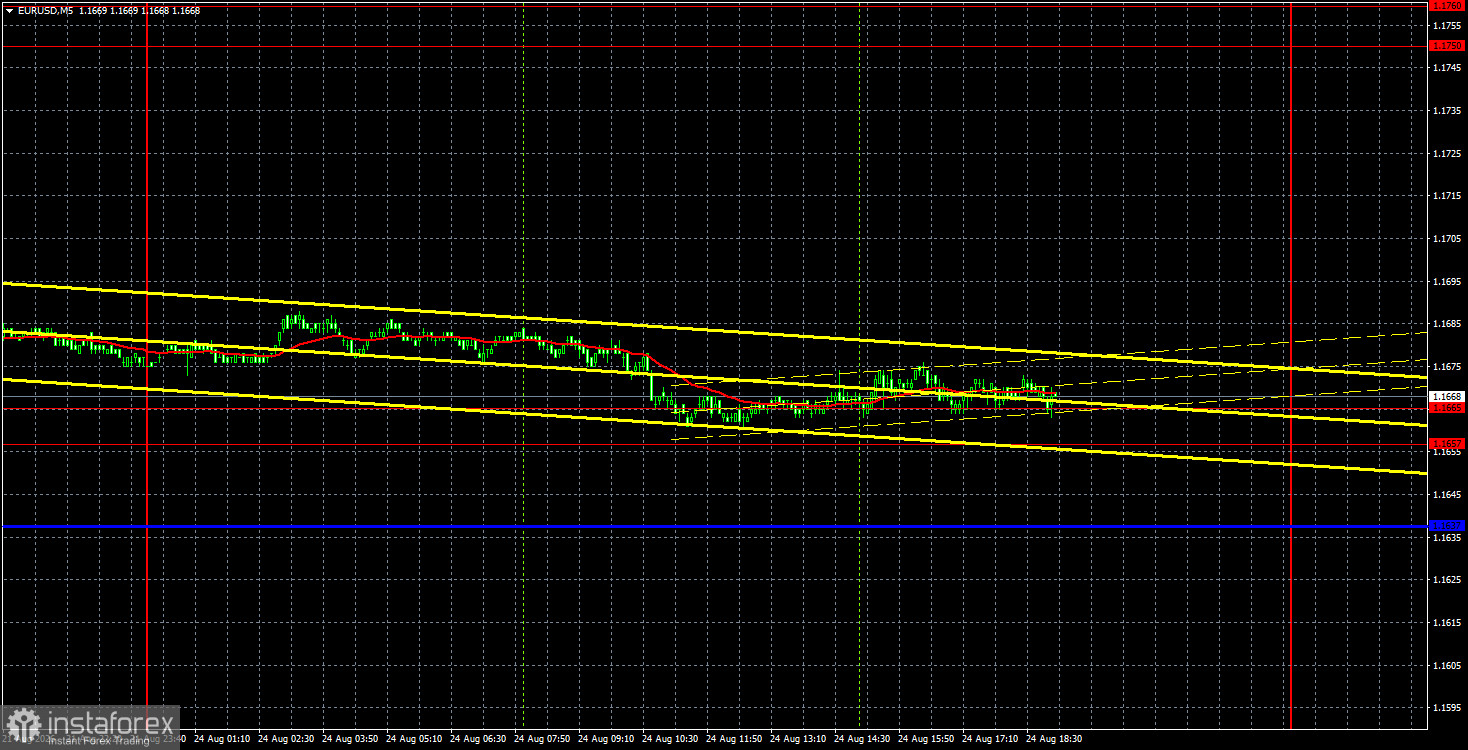
The EUR/USD currency pair on Monday showed only one thing—an absolute unwillingness to move. Formally, the downward correction that began at the end of last week continued. However, volatility was minimal, and throughout the day, there were no significant macroeconomic publications or fundamental events. All we can note is the escalating geopolitical situation in the Middle East. Recall that Donald Trump intends to impose an economic blockade on Iran, seeking support from other countries that do business with Tehran, particularly China. Trump has expressed indignation that Beijing continues to purchase Iranian oil, demanding that it cease such imports. Beijing has no intention of doing so. Therefore, in the near future, a new trade or sanctions war between China and the United States may begin.
Other than this, there are virtually no news items. The European currency retains excellent chances for continued growth, as there are still no factors favoring the dollar. This week, the American currency is more likely to resume its decline than to begin a noticeable increase. On Friday, the annual NonFarm Payrolls report will be published, from which it is difficult to expect a positive outcome, and Kevin Warsh, the head of the Federal Reserve, will also give a speech, who has been facing criticism from many experts lately.
From a technical standpoint, the pair continues to form an upward trend, which is now supported by a trend line. The trend is not particularly strong, but let's remember that none of the global factors are currently favoring the U.S. currency. The only help could come from geopolitics, but even that is currently underwhelming. Last week, the U.S. Treasury offered the dollar a lifebuoy, throwing it a 30-kilogram weight.
In the 5-minute timeframe, no trading signals were formed on Monday. At one point, the price dropped to the 1.1657-1.1665 area and traded along it until the end of the day, failing to break through or bounce off it.
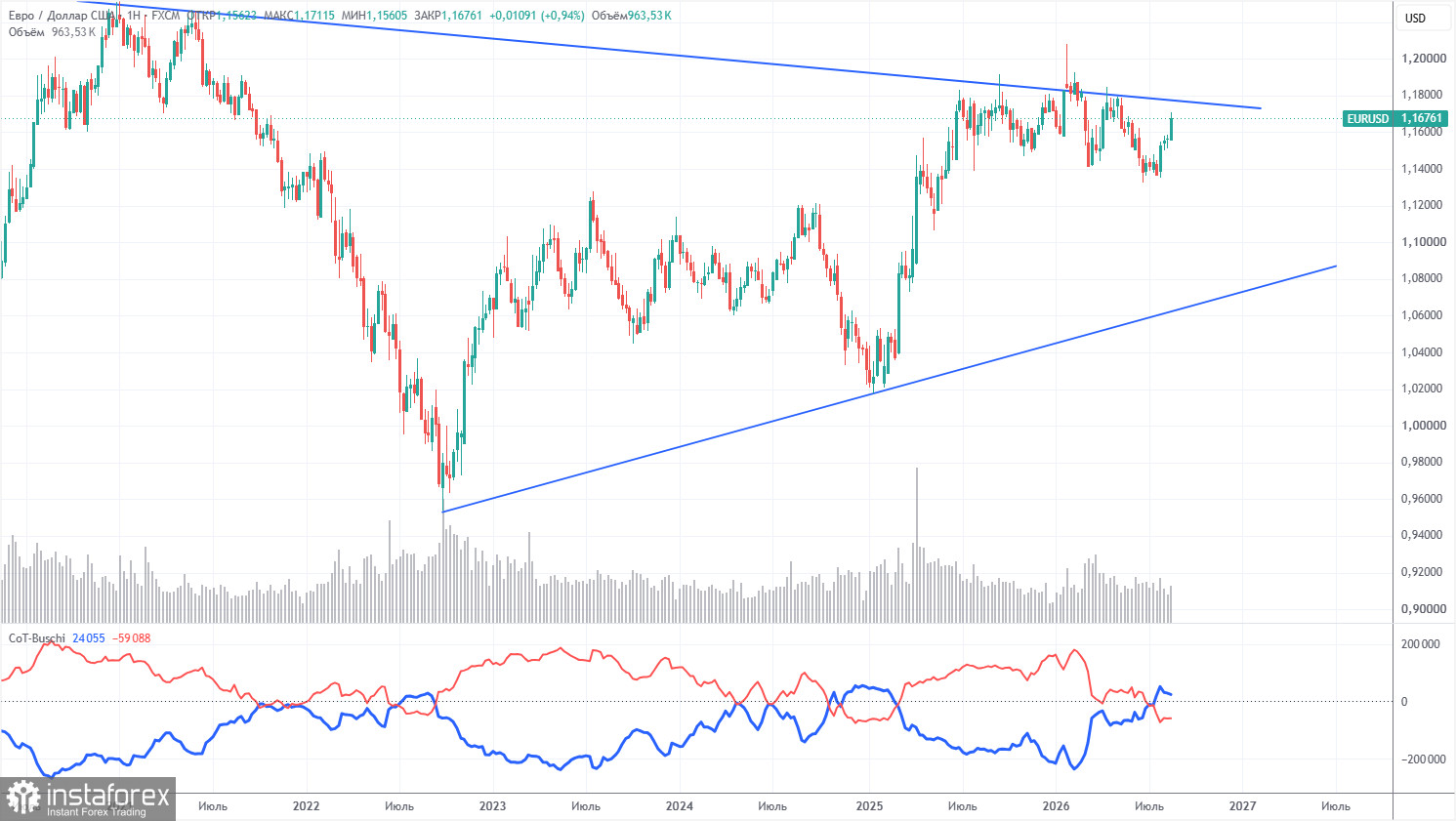
The latest COT report is dated August 18. The weekly timeframe illustration shows that the net position of non-commercial traders has become "bearish" and has significantly decreased in 2026 due to geopolitical events. Traders have been shedding the European currency in favor of the U.S. dollar in recent months. Trump's policy has not changed, but the dollar has served for some time as a "reserve currency."
We still see no fundamental factors that would strengthen the American currency. The war in the Middle East temporarily made the dollar super attractive, but once the "best before" date on this factor expires, everything will return to normal. This process may have already concluded. In the long term, the euro could fall to the level of $1.08 (the trend line), but the upward trend will still remain relevant. Over the past months of dollar growth, the pair has not moved significantly closer to this line.
The positioning of the red and blue lines of the indicator indicates parity between bulls and bears. During the last reporting week, the number of longs in the "Non-commercial" group decreased by 900, while the number of shorts decreased by 1,800. Consequently, the net position increased by 900 contracts over the week.
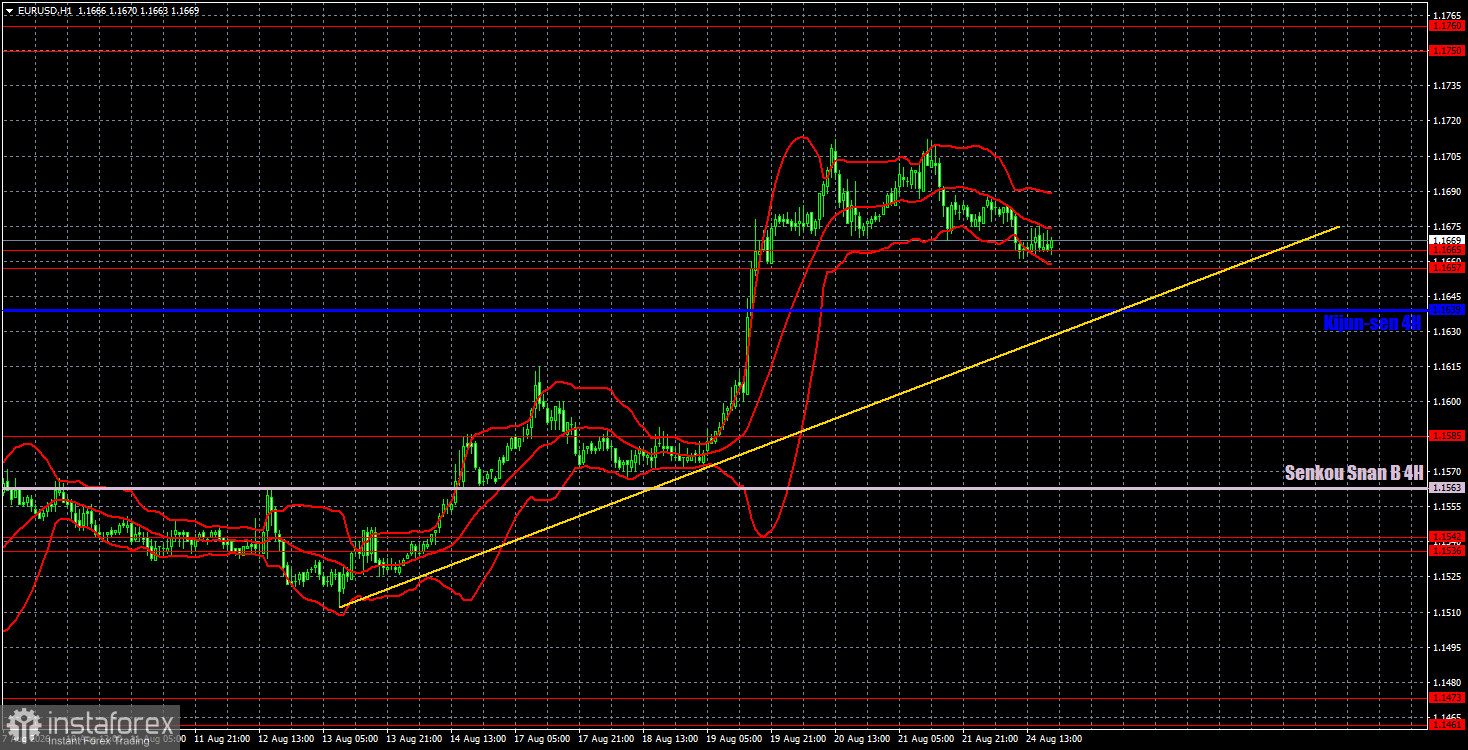
On the hourly timeframe, the pair maintains its upward trend. The situation in the Middle East remains tense and is not improving, but this is not enough for a new, powerful rise in the dollar. Currently, there are no significant factors favoring the U.S. dollar, so the European currency has every chance for medium-term growth. In contrast, the dollar can only rely on technical correction and geopolitics.
On August 25, we highlight the following levels for trading — 1.1234, 1.1274, 1.1362-1.1368, 1.1461-1.1473, 1.1536-1.1542, 1.1585, 1.1657-1.1665, 1.1750-1.1760, 1.1786, 1.1830-1.1837, as well as the Senkou Span B line (1.1563) and Kijun-sen (1.1639). The Ichimoku indicator lines may move throughout the day, which should be considered when determining trading signals. Don't forget to set a stop-loss order at breakeven when the price moves in the right direction by 15 pips. This will protect against potential losses if the signal proves false.
On Tuesday, Germany will publish the third estimate of GDP for the second quarter, as well as the business climate index. In the U.S., there will be new home sales and the weekly ADP report. All four reports are considered absolutely secondary, and we do not expect any market reaction to them. Volatility may again be weak.
Today, traders may consider short positions with targets at 1.1639 and 1.1585 if price settles below the 1.1657-1.1665 range. A bounce from the range of 1.1657-1.1665 would allow for opening long positions with a target in the range of 1.1750-1.1760.


