
Vea también


 18.03.2026 10:36 AM
On the hourly chart, the GBP/USD pair continued its upward movement on Tuesday and secured above the 1.3341–1.3352 level. Thus, the growth may continue toward the next resistance level of 1.3437–1.3465. A consolidation below the 1.3341–1.3352 level would favor the US dollar and a resumption of the decline toward the support level of 1.3199–1.3214.
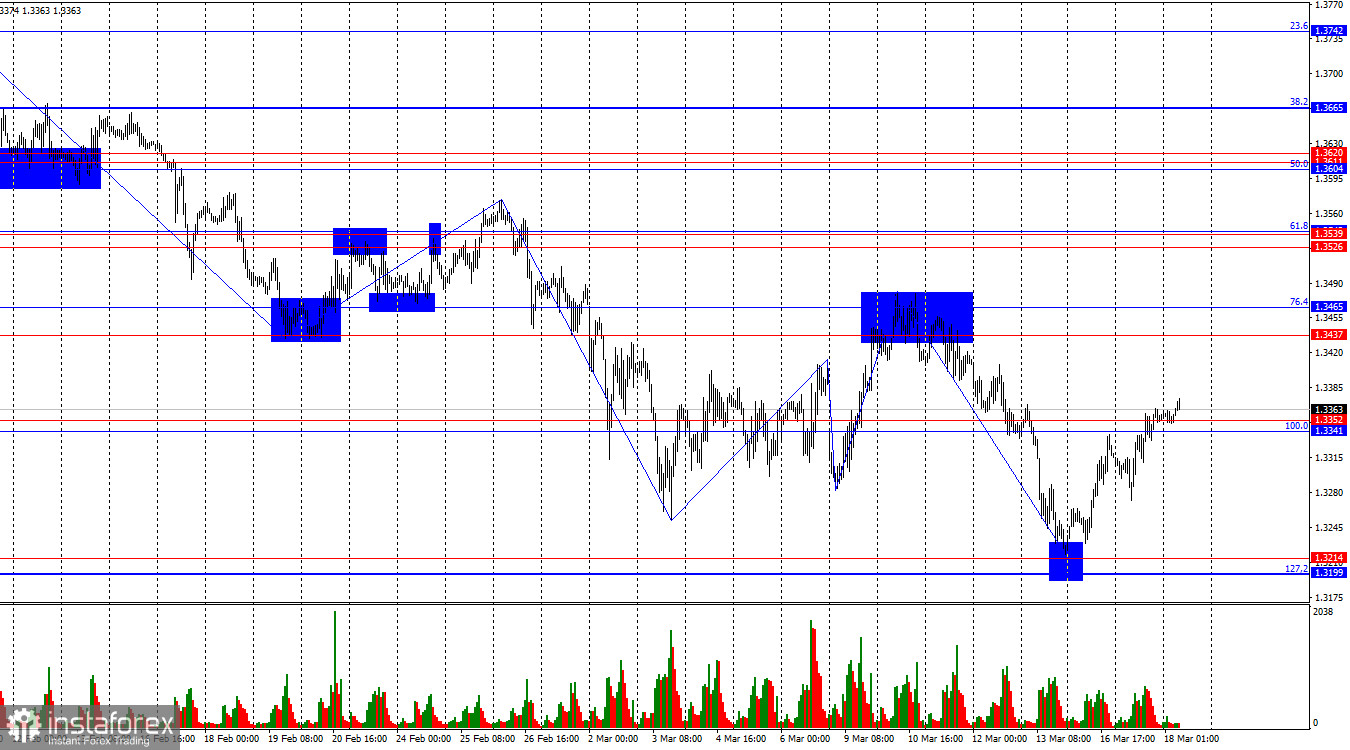
The wave situation has shifted back to "bearish." The last completed upward wave broke the previous peak, but the latest downward wave also broke the two previous lows. The news background for the British currency has been weak in recent months, while geopolitics has given bears a full advantage in the market. The war in Iran remains the main reason for the strengthening of the US dollar, and bullish traders still do not see clear timeframes for the end of the conflict. Therefore, they are in no hurry to go on the offensive.
Tuesday's news background did not attract much interest from traders, but weak reports about a possible unblocking of the Strait of Hormuz and a temporary pause in bearish pressure allowed the pound to recover slightly. This evening, the Federal Reserve meeting will take place, and its results are, on the one hand, already known, but on the other hand, completely unpredictable. The monetary policy decision has already been made—keeping all parameters unchanged. However, it is unclear how the regulator will act during the remainder of 2026. Until Jerome Powell steps down and Kevin Warsh takes his place, I do not expect interest rates to change. However, the key issue is the FOMC's outlook for the coming year. If inflation accelerates under pressure from rising oil prices, the Fed will have to shift its focus from the labor market to inflation. At the same time, Donald Trump is again demanding an immediate rate cut, the US economy is slowing, and the labor market is not showing recovery. This is the Fed's dilemma. To stimulate the economy and labor market, rates must be lowered. But in that case, inflation will inevitably accelerate, even without the Middle East conflict, which is still ongoing. If the Fed focuses on inflation, the US economy will slow further, and Nonfarm Payrolls may remain near zero or even negative each month.
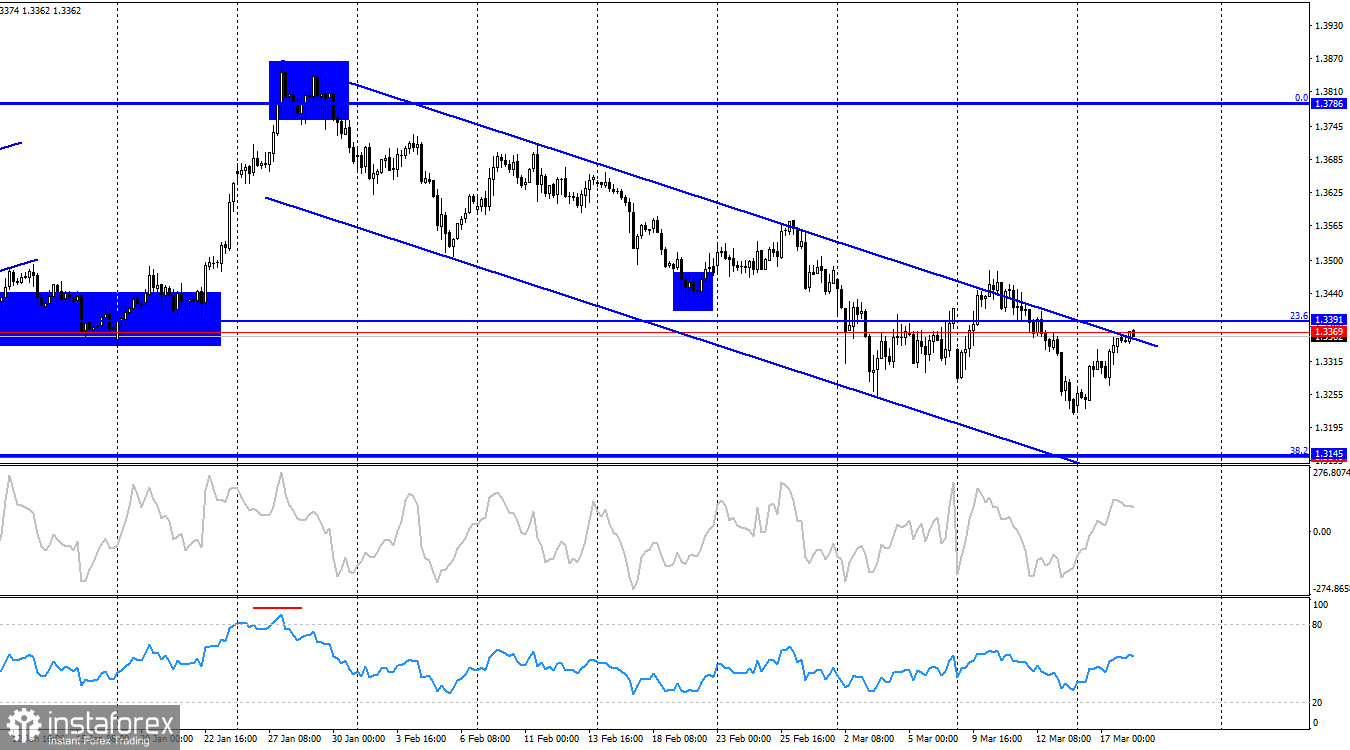
On the 4-hour chart, the pair has returned to the upper boundary of the downward trend channel. A rebound from this line for the fifth time would again favor the US dollar and a resumption of the decline toward the corrective level of 1.3145. Only a close above the descending channel would allow traders to expect the end of the bearish trend and growth toward the Fibonacci level of 0.0% at 1.3786. No emerging divergences are observed in any indicators today.
Commitments of Traders (COT) Report:
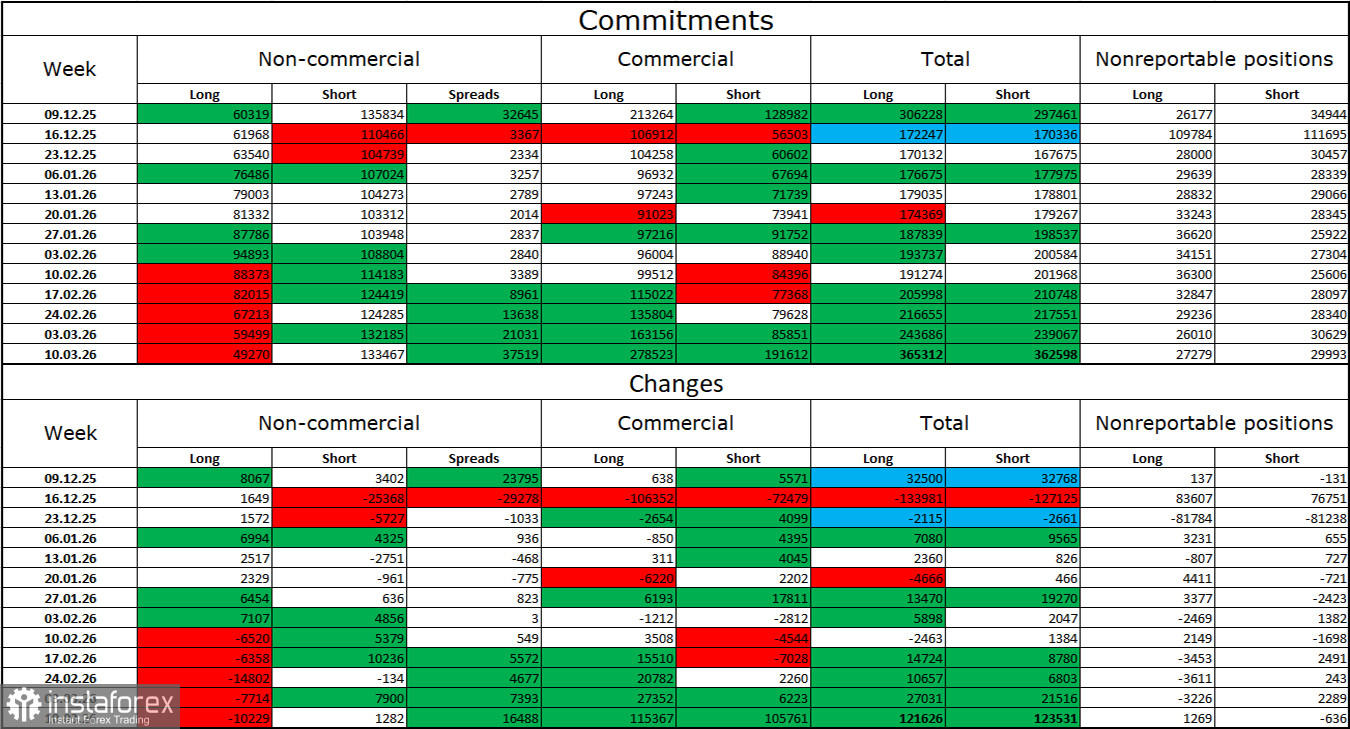
The sentiment of the "Non-commercial" trader category became more bearish over the last reporting week, which no longer appears accidental under current conditions. The number of long positions held by speculators decreased by 10,229, while short positions increased by 1,282. The gap between long and short positions is now roughly: 49 thousand versus 133 thousand. In recent months, bears have dominated more often, although the situation with euro contracts is the opposite. I still do not believe in a sustained bearish trend for the pound, but now everything will depend not on economic indicators or Trump's trade policy, but on the duration and scale of the war in the Middle East.
Over the past year, the pound looked like a safer currency compared to the dollar—more stable and with a clearer economic outlook. However, in recent months, first a correction began while maintaining a bullish trend, and then the Middle East conflict started escalating almost daily. Geopolitics remains the only reason for the strengthening of the US dollar.
Economic calendar for the US and the UK:
On March 18, the economic calendar contains four events, three of which are considered important. The impact of the news background on market sentiment on Wednesday may again be strong, but mainly in the second half of the day.
GBP/USD forecast and trader advice:
Selling the pair is possible today if it consolidates below the 1.3341–1.3352 level on the hourly chart, with a target of 1.3199–1.3214. Buying is possible if it closes above the 1.3341–1.3352 level, with a target of 1.3437–1.3465.
Fibonacci levels are built from 1.3341 to 1.3866 on the hourly chart and from 1.2104 to 1.3786 on the 4-hour chart.


