
আরও দেখুন


 17.08.2026 03:35 PM
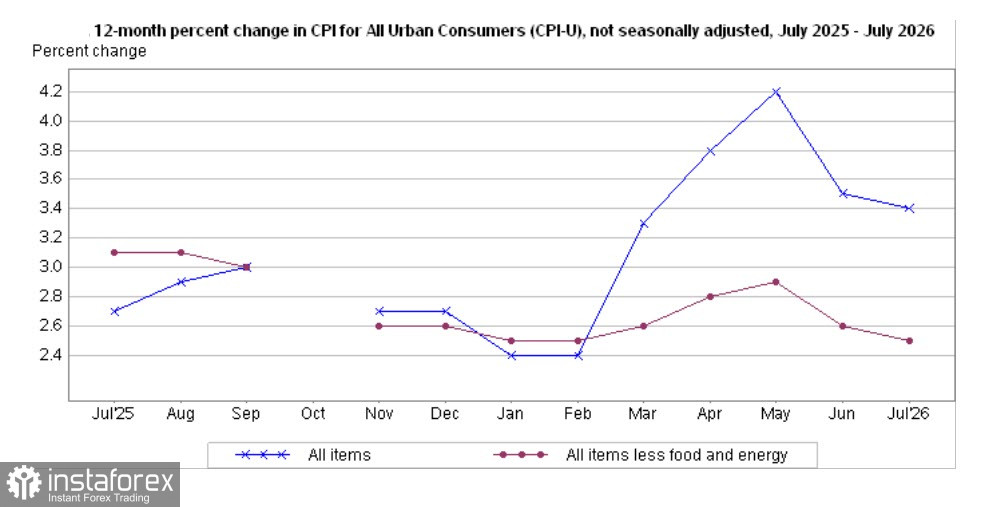
The July consumer price index ticked up 0.1% month-on-month, while the year-on-year rate slowed to 3.4% from June's 3.5%. The producer price index showed zero growth for the month, and annual growth was 4.7% versus 5.5% in June. This is the second month in a row that inflationary pressure is easing, indicating the fading of the inflationary shock caused by the recent rally in energy prices.
The most worrying signal was retail sales falling 0.6% month-on-month in July, the sharpest decline since May 2025. This fully reversed June's 0.2% gain and was significantly worse than market expectations. Weak consumer demand is a clear alarm for an economy where consumption is traditionally the main growth driver.
Preliminary data from the University of Michigan's August survey showed the consumer sentiment index dropped to 51.0 from 55.2 in June, a three-month low. The consumer expectations index also dropped from 55.4 to 50.6 points. Inflation expectations remain elevated: one-year expectations rose to 4.3% from 4.2%, while five-year expectations held steady at 3.3%.
Completing the picture is a weak employment report for August 7, which showed a reduction of 23,000 jobs when an increase had been expected.
These economic releases triggered a dramatic reversal in monetary policy expectations. According to CME FedWatch, the probability of a rate hike at the September FOMC meeting has fallen to roughly 30%. By comparison, a month ago that probability was 50%, and in July it reached 75%. Expectations for a rate increase have been pushed back toward the December meeting.
The shift has been striking. In just a few weeks, the market fully erased the "hawkish premium" accumulated since Kevin Warsh's appointment as Fed chair. The dollar index fell to three-month lows, while stock markets reacted with gains: the S&P 500 reached an all-time high.
While macro data is weighing on the dollar, geopolitics continues to support it. The conflict around the Strait of Hormuz has entered a new phase. The temporary truce expired on August 8, and talks to extend it have stalled. Iran, having completed reshuffles in its top military and political leadership that strengthened hawkish factions, appears prepared for a prolonged confrontation.
Trump's administration faces a dilemma. The publicly stated aim — preventing Iran from obtaining nuclear weapons — is gradually receding. It is becoming increasingly apparent that the true US goal is to restore control over the strategic strait and obtain the right to levy fees for ship passage.

Interestingly, in either outcome the dollar may retain its position. If the US forces Iran and restores control of the strait, that would strengthen America's geopolitical influence and confidence in the dollar. If the conflict drags on and oil prices stay high, the economic damage to Europe, Japan and China — all energy import-dependent — would be greater than to the US. That could paradoxically support the dollar as both a safe-haven currency and the currency of the relatively least-affected country.
Weak US data puts downward pressure on the dollar, while the euro is supported by the eurozone's positive trade balance. Demand for the Japanese yen as a defensive asset should limit upside in the USD/JPY pair.
The US dollar is caught between conflicting forces. On one side are weak macroeconomic figures and a pullback in Fed rate expectations pushing the index down. On the other is the geopolitical confrontation with Iran, which prevents the dollar from collapsing.
Two factors will be decisive in the coming weeks:
The base scenario is further consolidation of the dollar index (DXY) in the 99–100 range, with a risk of a downside break if new weak economic data appears. The greenback may receive support from geopolitics, but for a confident move above 100, either a marked hawkish turn in Fed rhetoric or a substantial escalation that makes the dollar the sole safe haven would be required.


