
Veja também


 06.05.2026 01:00 AM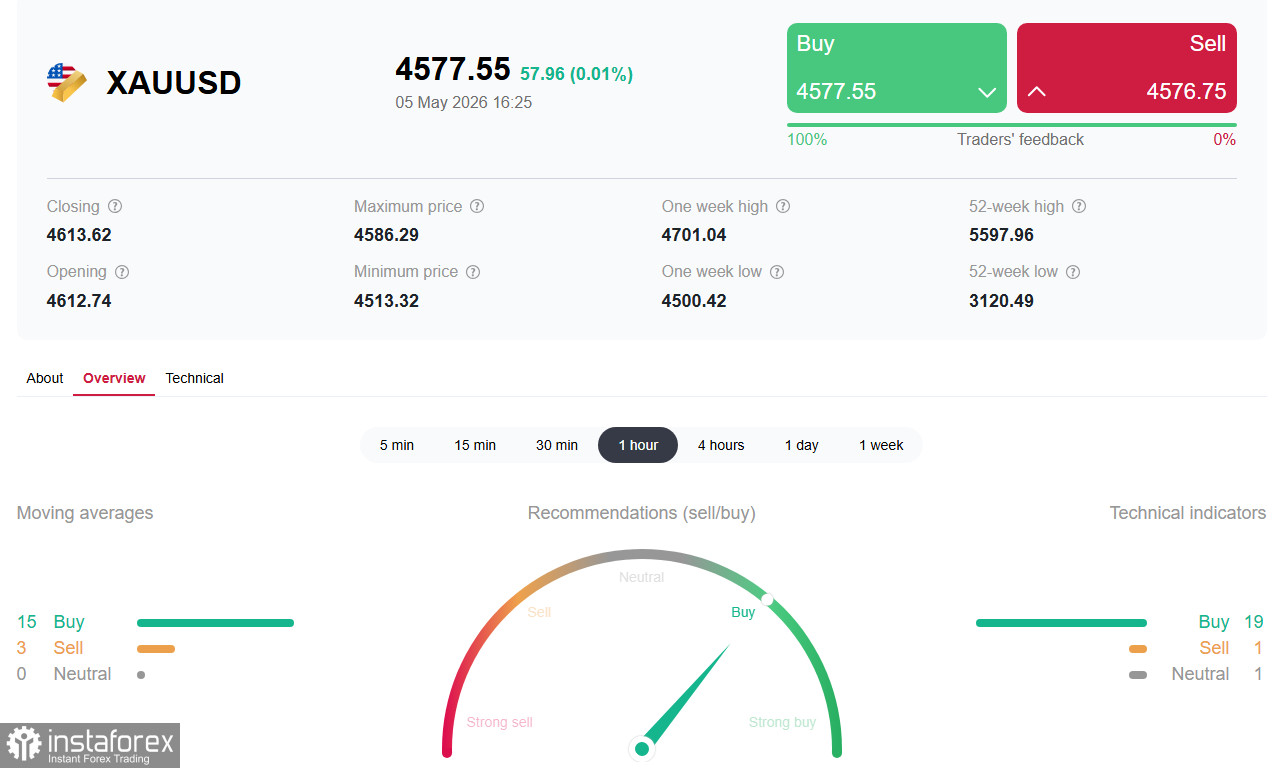
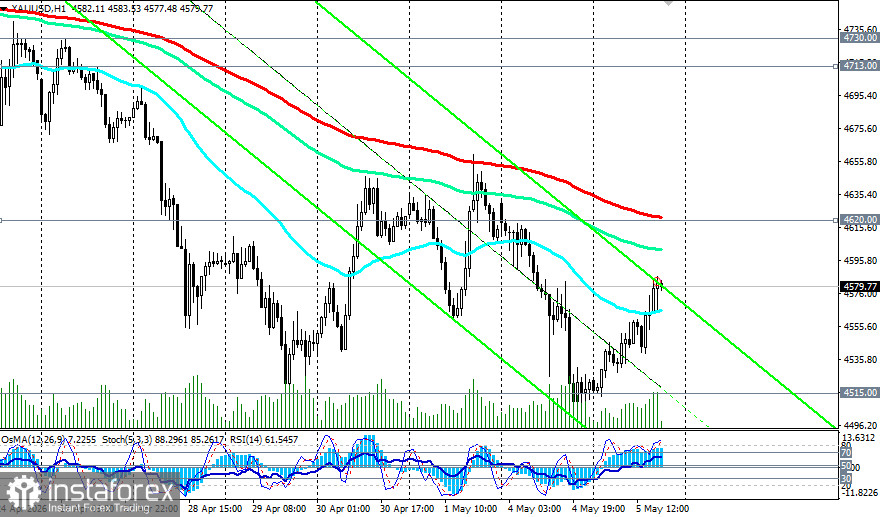
Gold enters the middle of the week in a vulnerable position. On Tuesday, the precious metal attempted a recovery, bouncing off a five-week low around 4500.00, but failed to build momentum and is consolidating near 4580.00.
The reason for such weak dynamics is the renewed escalation of the conflict in the Strait of Hormuz, which, rather than supporting gold as a "safe haven," paradoxically increased expectations of a Federal Reserve tightening, directly putting pressure on the non-yielding asset.
On Monday, US President Donald Trump announced a naval operation called "Project Freedom" to escort stranded commercial vessels through the Strait of Hormuz. This was immediately followed by a response from Iran. Reports indicate that Iranian forces attacked oil infrastructure in the United Arab Emirates (UAE), while President Trump stated that American forces had downed seven Iranian speedboats.
Trump warned that "Iran will be wiped off the face of the earth" if it attacks American vessels involved in "Project Freedom." As tensions around the Strait of Hormuz escalate and direct negotiations remain limited, the conflict shows no signs of abating in the near future.
Economists note a key correlation that explains the paradoxical behavior of gold. Since the start of the conflict in Iran, oil prices have become a key factor in gold price movements. The following logic applies: rising oil prices, all else equal, indicate higher inflation risks and therefore increase the likelihood of monetary policy tightening. The prospect of higher opportunity costs associated with holding gold, in turn, puts downward pressure on its price.
Energy prices remain significantly above the psychological level of $100 per barrel. The American benchmark, West Texas Intermediate (WTI), despite today's decline, is holding near the $100.00 mark. Rising oil prices have revived inflationary concerns and strengthened bets for tighter monetary policy by central banks, particularly the Fed.
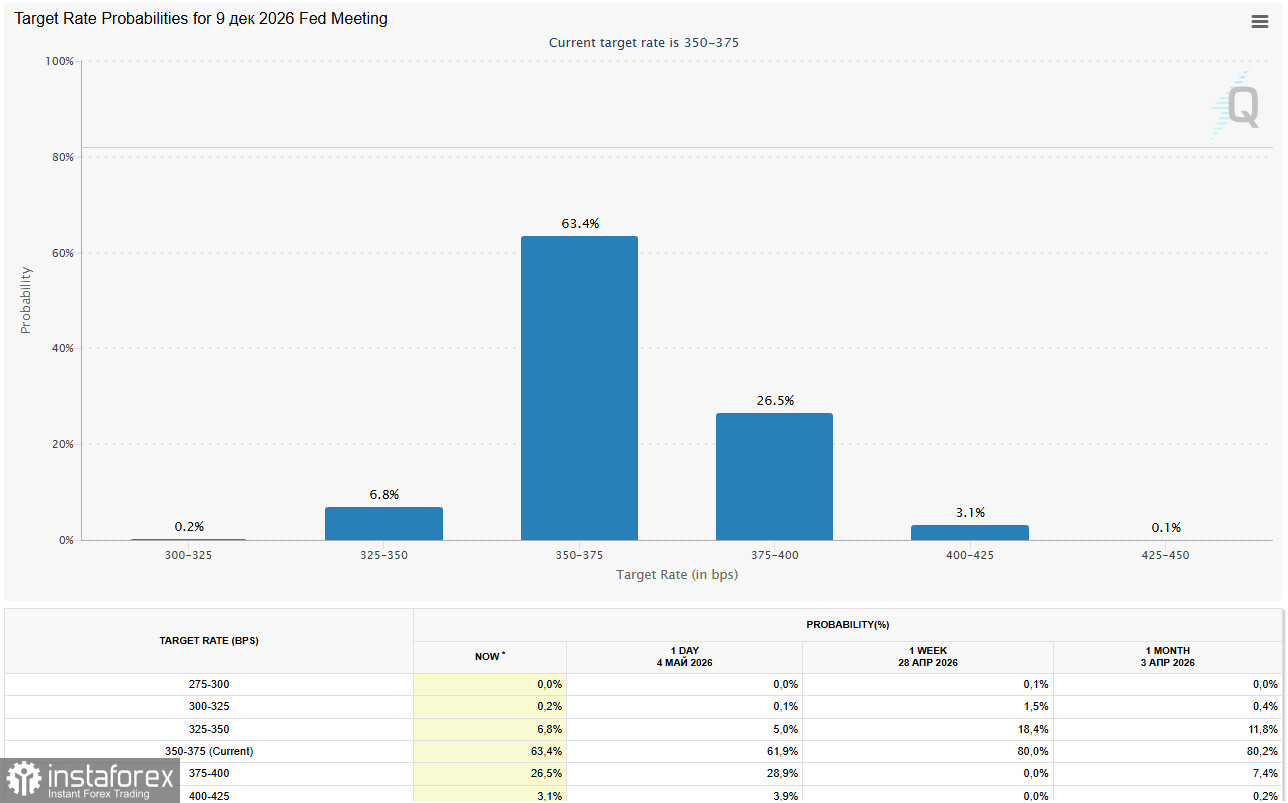
The likelihood of a Fed rate hike in December has risen to about 27% from nearly zero just a week ago. The CME FedWatch tool indicates that traders are now factoring in not just a pause but also a real chance of tightening.
High yields on US Treasury bonds and a strengthening dollar continue to put pressure on the non-yielding metal.
Four dissenting votes against a dovish stance at the April FOMC meeting (the first time in over 30 years) signal that the new chair, Kevin Warsh, will face more challenging meetings in fulfilling the president's stated desire for a rapid interest rate decrease. Some economists maintain a forecast for two rate cuts in the fourth quarter, but only if the Strait of Hormuz is reopened and oil prices begin to decline.
Over the past seven trading days, a stable inverse correlation between oil prices and gold has been observed. Until Monday, price fluctuations in the gold market were less pronounced, creating the illusion of a temporary equilibrium at 4600.00. However, after strong US data and another rise in oil prices, which raised concerns about interest rate hikes, the price of gold fell back below 4600.00 and closed just above 4500.00, marking a monthly low.
Despite the current pressure, there are also positive signals. According to the World Gold Council, China's demand for bars and coins in the first quarter was nearly 67% higher than the previous year, accounting for just under 45% of global demand for bars and coins. The People's Bank of China has published a draft proposal to ease gold import rules starting in June: the use of "multi-use permits" will be expanded, the validity period will be extended from six to nine months, limitations on the number of uses will be lifted, and more Chinese ports will be allowed for the clearance of precious metals. This could provide additional support for prices.
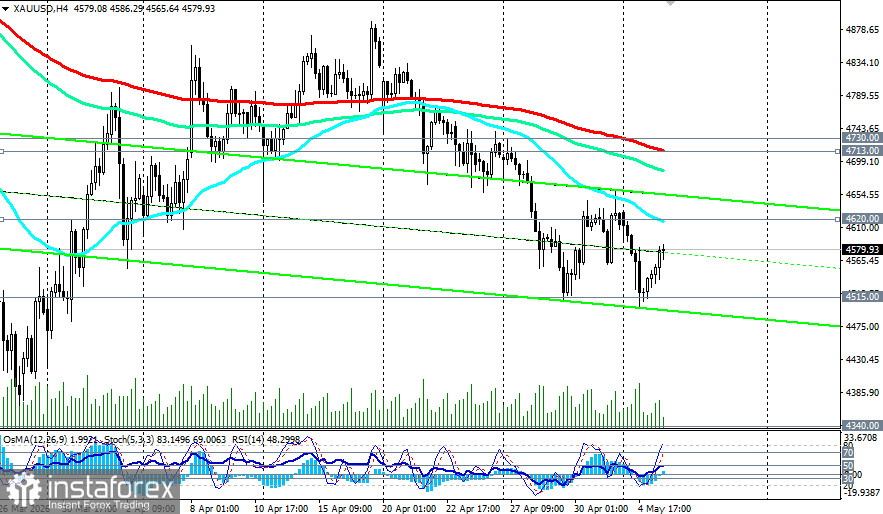
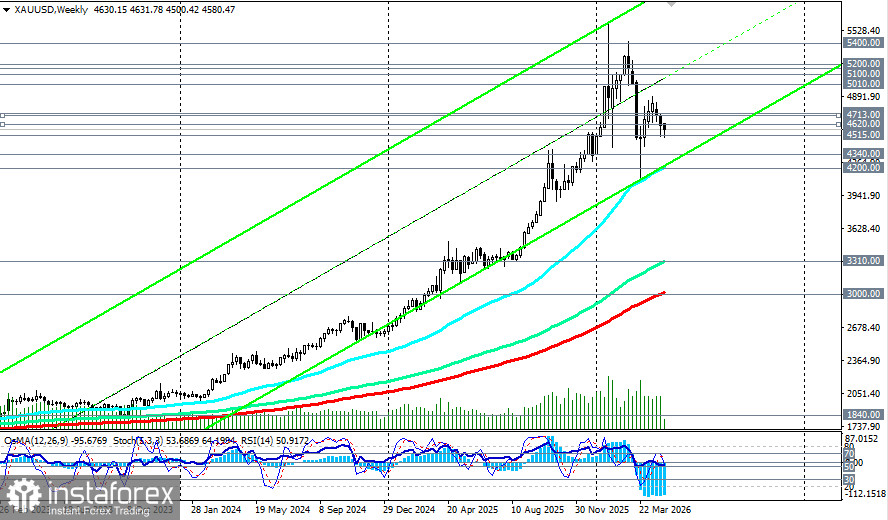
From a technical perspective, XAU/USD continues to be under the control of the bears in the short term. The pair is still trading above the 200-day EMA (4340.00), indicating the preservation of a broader upward trend. However, the situation on shorter timeframes remains concerning.
On the 1- and 4-hour timeframes, the pair remains below the 144- and 200-period EMAs, a classic sign of a continuing bearish bias.
| Date | Event | Expected Impact |
|---|---|---|
Wednesday, May 6 | ADP Employment Change (US) | Precursor to Friday's NFP |
Wednesday, May 6 | Speeches from Fed Representatives | Signals on further rate trajectory |
Friday, May 8 | Nonfarm Payrolls Report (US) | Key trigger — will determine the short-term trend of the dollar and rate expectations |
The main scenario suggests that downward pressure will persist. As long as the conflict in the Strait of Hormuz keeps oil prices above the mark of $100.00 and hawkish expectations regarding the Fed remain, gold will continue to be under pressure.
A short-term rebound is possible from current levels, but for a sustainable reversal, the bulls need to break through resistance at 4713.00 (200 EMA on the 4-hour chart) to 4730.00 (50 EMA on the daily chart).
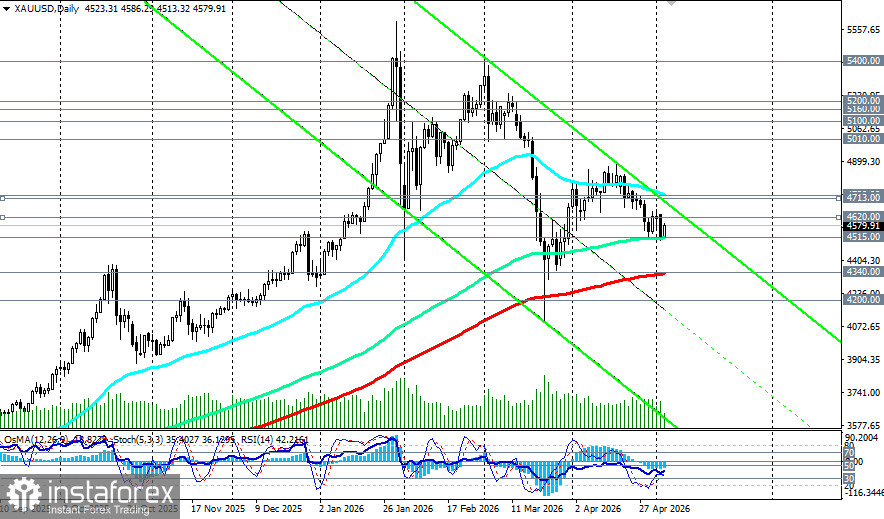
Only breaking through these levels will open the path to the psychological level of 5000.00.
Gold finds itself in a paradoxical situation. Instead of directly benefiting from geopolitical uncertainty, the precious metal is suffering from a "side effect"—the rise in oil prices, which heightens inflationary expectations and pushes the Fed toward policy tightening.
The key zone of 4515.00–4730.00 will become the arena for a decisive battle. Protecting the support at 4515.00-4500.00 is critical to preventing a deeper decline to 4340.00-4200.00 and beyond.
In addition to the "oil channel," physical demand remains in focus. China is planning to ease its gold import rules: the use of "multi-use permits" will be expanded, their validity increased to 9 months, restrictions on their use lifted, and more ports will be allowed for the clearance of precious metals. This could provide support for prices. Investors should closely monitor the ongoing geopolitical situation and the US labor market data coming out on Friday.


