
Vea también


 13.07.2026 10:21 AM
On Friday, the EUR/USD pair once again reversed in favor of the U.S. dollar and consolidated below the 100.0% Fibonacci retracement level at 1.1409. However, the pair has been trading sideways in recent weeks, and the 1.1409 level has not provided reliable trading signals. The vast majority of signals generated around this level have failed to play out. Therefore, it is advisable to wait for the current sideways range to be resolved before opening new positions. Market activity remains subdued.
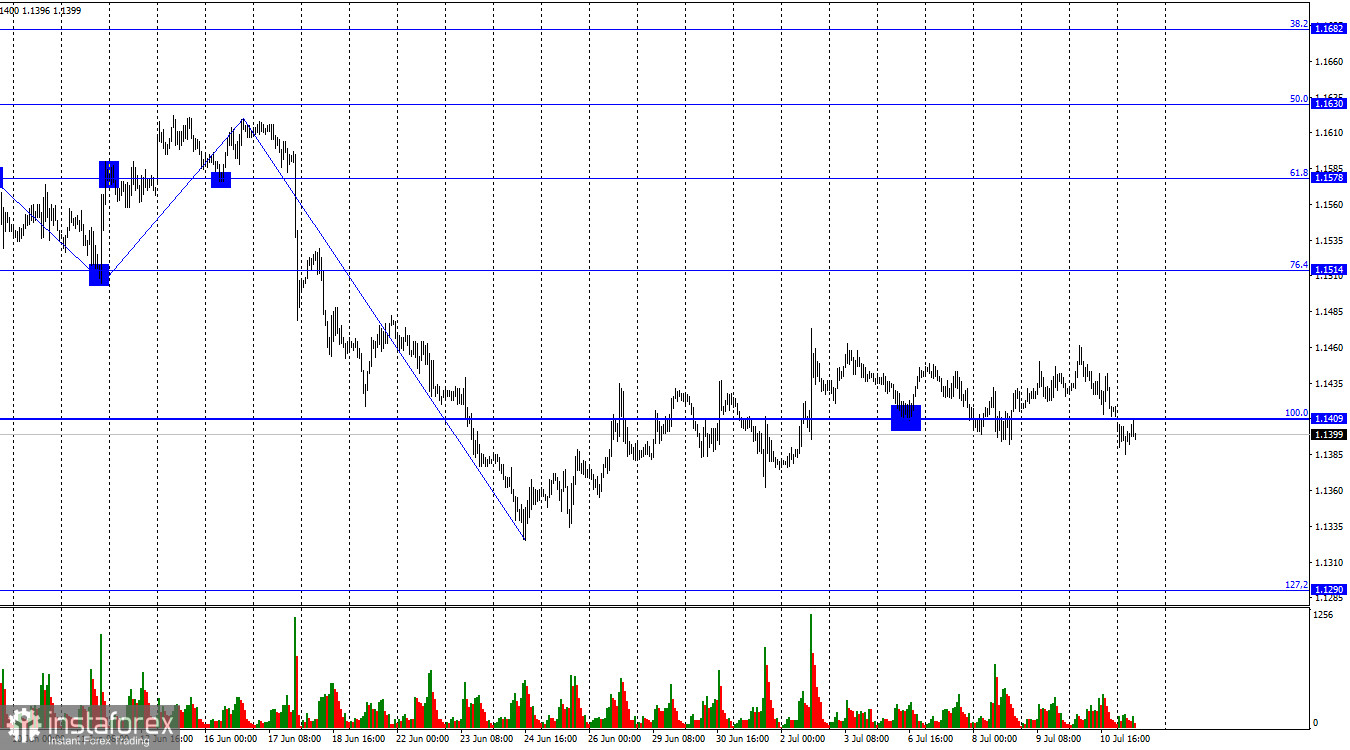
The wave structure on the hourly chart remains bearish, despite the bulls' attempts to regain control over the past two weeks. The latest completed downward wave broke below the previous low, while the latest upward wave has not yet exceeded the previous high and continues to develop. The geopolitical environment has improved considerably in recent weeks, as military operations in the Middle East have at least paused, and Iran and the United States have signed a preliminary agreement. However, it will only be possible to conclude that the bearish trend has ended if the pair breaks above the 1.1620 high or if two consecutive bullish waves are formed.
There was no significant macroeconomic news on Friday. The new week also begins quietly, but tomorrow the United States will release inflation data that could play a decisive role ahead of the next FOMC meeting. Unfortunately, inflation is now heavily influenced by energy prices and the situation in the Strait of Hormuz, which has repeatedly faced disruptions to maritime traffic. One thing is certain: the strait cannot currently be considered fully open or completely safe for tanker traffic. Therefore, inflation may slow slightly tomorrow, but it could accelerate again next month—or at least stop slowing. Consequently, even if the Consumer Price Index declines to 3.8%, it should not automatically be interpreted as the beginning of a sustained return toward the Federal Reserve's inflation target. For this reason, I believe it is still too early to conclude that the Fed will abandon its planned monetary policy tightening. Greater clarity regarding the situation in the Strait of Hormuz is needed first. Until then, I expect the Federal Reserve to maintain a hawkish stance.
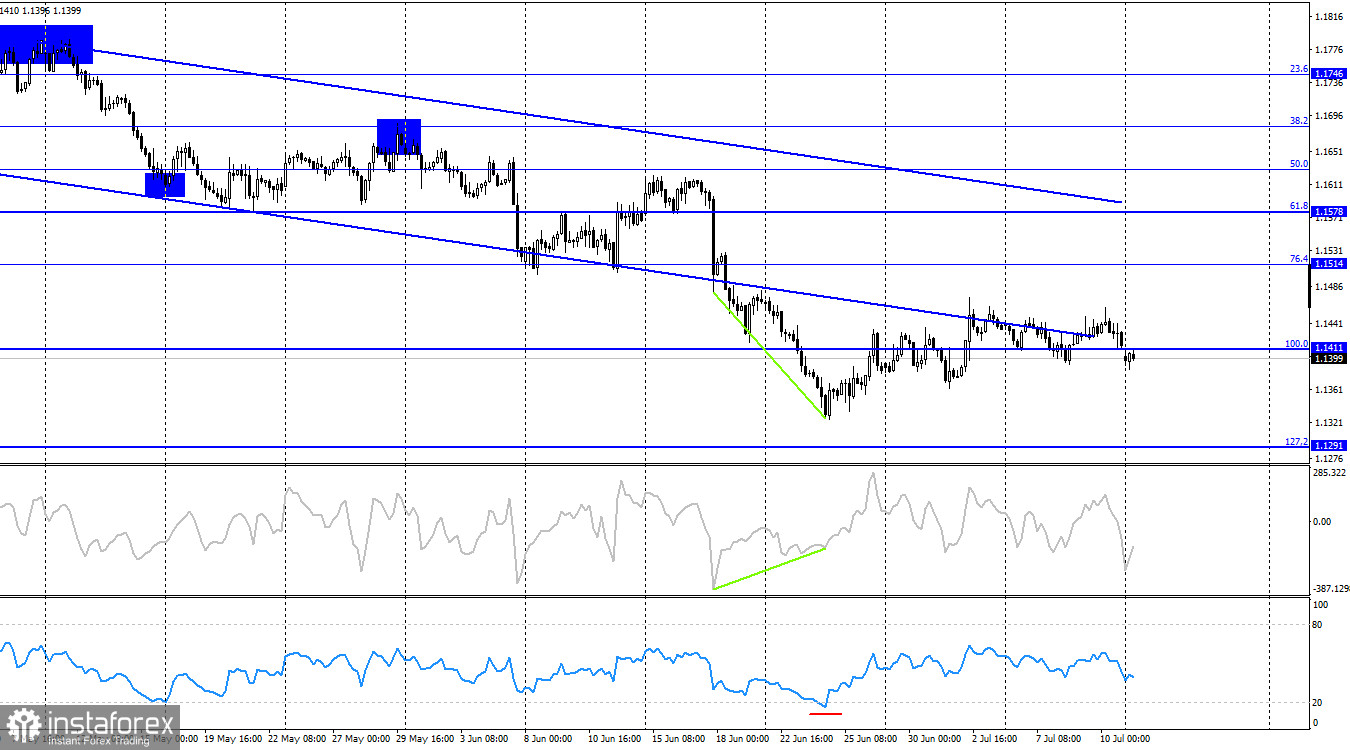
On the four-hour chart, the pair continues to trade within a sideways range. Consolidation below 1.1411 keeps the door open for a decline toward the 127.2% Fibonacci retracement level at 1.1291. However, price direction has been changing too frequently recently, while overall market participation remains weak. None of the technical indicators currently show any developing divergences. The descending trend channel remains valid.
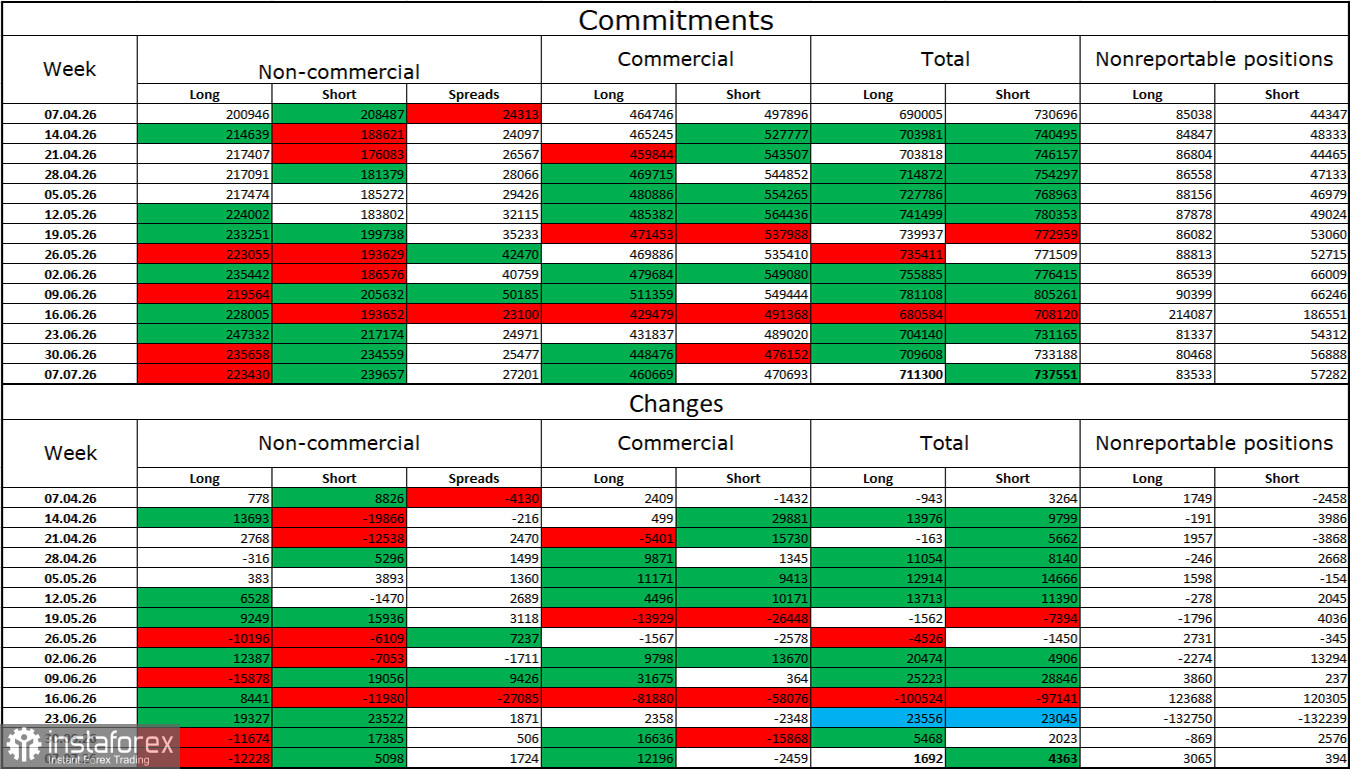
During the latest reporting week, professional traders closed 12,228 Long positions and opened 5,098 Short positions. Over the seven weeks of February and March, the bulls' overwhelming advantage disappeared due to the conflict involving Iran. During the past fifteen weeks, positioning has become more balanced following the suspension of hostilities in the Middle East. Speculative traders currently hold approximately 223,000 Long positions and 239,000 Short positions.
From a longer-term perspective, large institutional traders continue to show considerable interest in the euro. Naturally, the many geopolitical events that have characterized recent years continue to influence investor sentiment. In particular, market participants remain focused on developments in the Middle East, where military operations have paused and negotiations have begun, potentially paving the way for a lasting peace agreement. At the same time, the market continues to overlook the improvement in geopolitical conditions, as well as several other factors that remain supportive of the euro.
The economic calendar for July 13 contains no notable events. Therefore, macroeconomic data is unlikely to influence market sentiment on Monday.
Buy positions may be considered if the pair consolidates above 1.1409 on the hourly chart, targeting 1.1514. Sell positions may be considered if the pair consolidates below 1.1409 on the hourly chart, targeting 1.1290. However, current market movements remain extremely weak, and the 1.1409 level has not been generating reliable trading signals.
Fibonacci retracement grids are drawn from 1.1409 to 1.1850 on the hourly chart and from 1.1411 to 1.1850 on the four-hour chart.


