
Vea también


 19.12.2025 12:46 AM
The USD/JPY pair has traded within a broad range of 154.50 to 157.00 over the past three weeks, bouncing alternately between the upper and lower boundaries. Looking at the weekly chart, it becomes evident that traders are uncertain about the direction of price movement. Upward impulses are followed by downward movements, and vice versa. The contradictory outcomes of the December FOMC meeting have not helped traders, neither bulls nor bears. Ahead of this meeting, the USD/JPY pair approached the upper boundary of the aforementioned price range but fell to the lower boundary after the verdict was announced, marking a low of 154.40. However, in this price area, sellers took profits, and buyers regained control of the pair.
On Friday, the currency pair will again enter a zone of heightened price volatility as the results of the two-day Bank of Japan meeting are announced—the last meeting of the year.
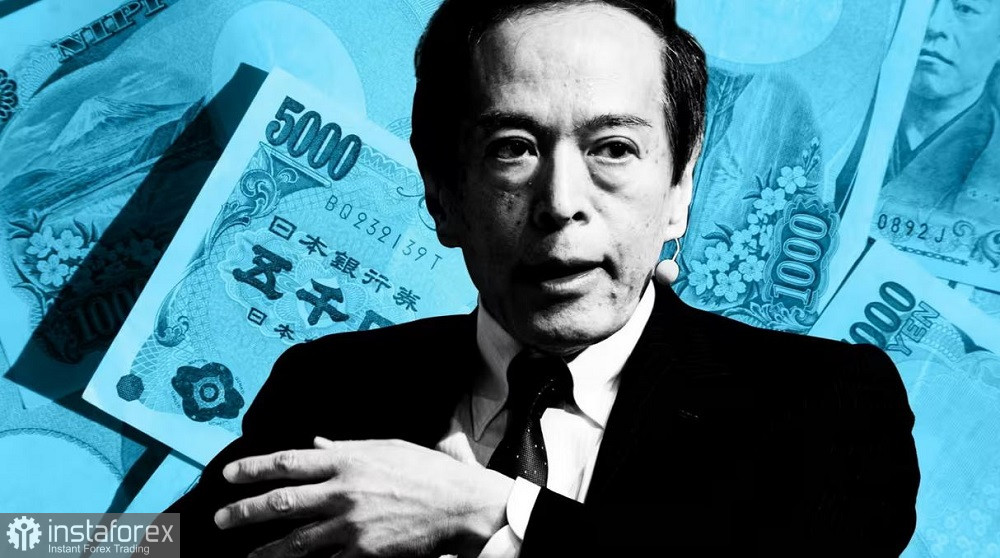
Preliminary forecasts suggest that the central bank will raise interest rates by 25 basis points. This would be the central bank's first such action this year. The primary reason for this decision is inflation, which remains stubbornly above the target level of 2%.
Recall that BoJ Governor Kazuo Ueda hinted earlier in December that an interest rate hike might occur at the December meeting. He indicated that this decision was coordinated with Prime Minister Sanae Takachi, despite her being an advocate for ultra-loose monetary policy.
Ueda justified his position with rising inflation, referencing the latest CPI growth report for October. Indeed, the overall consumer price index accelerated to 3.0% in October, its highest level since July of this year. The index, excluding fresh food prices, also rose to 3.0%. This component shows an upward trend following a prolonged decline. The core CPI, excluding fresh food and energy, accelerated to 3.1% year-on-year in October, up from 3.0% the previous month.
Such a result supports tightening monetary policy.
However, the interest rate increase is already factored into the prices. The intrigue remains regarding the central bank's further decisions. According to the baseline scenario, the central bank may allow further interest rate hikes next year, tentatively in April, once it has sufficient information on wage trajectories in Japan. According to Bloomberg, the central bank may indeed indicate its willingness for further rate increases, but only if the economic picture supports it—"if the economic outlook develops as expected."
Whether the current economic picture supports such a decision remains an open question.
We should note that just hours before the announced interest rate decision in Japan, national inflation growth data for November will be published. Forecasts suggest the overall CPI will slow to 2.9%, while the core CPI (excluding fresh food prices) will remain at 3%.
It is also worth noting that the Tokyo consumer price index, considered a leading indicator of the country's overall price dynamics, slowed to 2.7% in November, down from 2.8% in October. Excluding fresh food prices, the index remained at the October level of 2.8%. It can be assumed that the national inflation growth report for November will also come out in the red zone, which may lead to a more dovish tone in the accompanying statement.
Additionally, it is essential to remember that at the beginning of December, the final GDP growth data for Japan for the third quarter was released. The figure was revised downward. According to the final data, the Japanese economy contracted by 0.6% compared to the second quarter of this year (initially a less severe decline of 0.4% was anticipated), and by 2.3% compared to the third quarter of 2024 (initially projected at -1.8%).
These listed fundamental factors do not support hawkish rhetoric from the central bank.
In other words, although the formal outcomes of the BoJ's December meeting are predetermined, the intrigue remains, as there is a risk of a "dovish hike." That is, the central bank may raise rates by 25 basis points but will use cautious wording, hinting at a wait-and-see stance.
Given the uncertainty, it is advisable to maintain a wait-and-see stance on the USD/JPY pair. Moreover, the technical indicators also paint an uncertain picture: on the daily chart, the pair is located on the middle line of the Bollinger Bands indicator, which coincides with the Tenkan-sen and Kijun-sen lines, and remains above the Kumo cloud. If the BoJ indeed implements a "dovish hike" scenario, the pair may test the upper band of the Bollinger Bands on the D1 timeframe, which corresponds to 157.00. However, if the regulator maintains a hawkish stance, the 154.50 target will reemerge, aligned with the lower Bollinger Band on the same timeframe.


