
আরও দেখুন


 20.03.2026 01:20 AM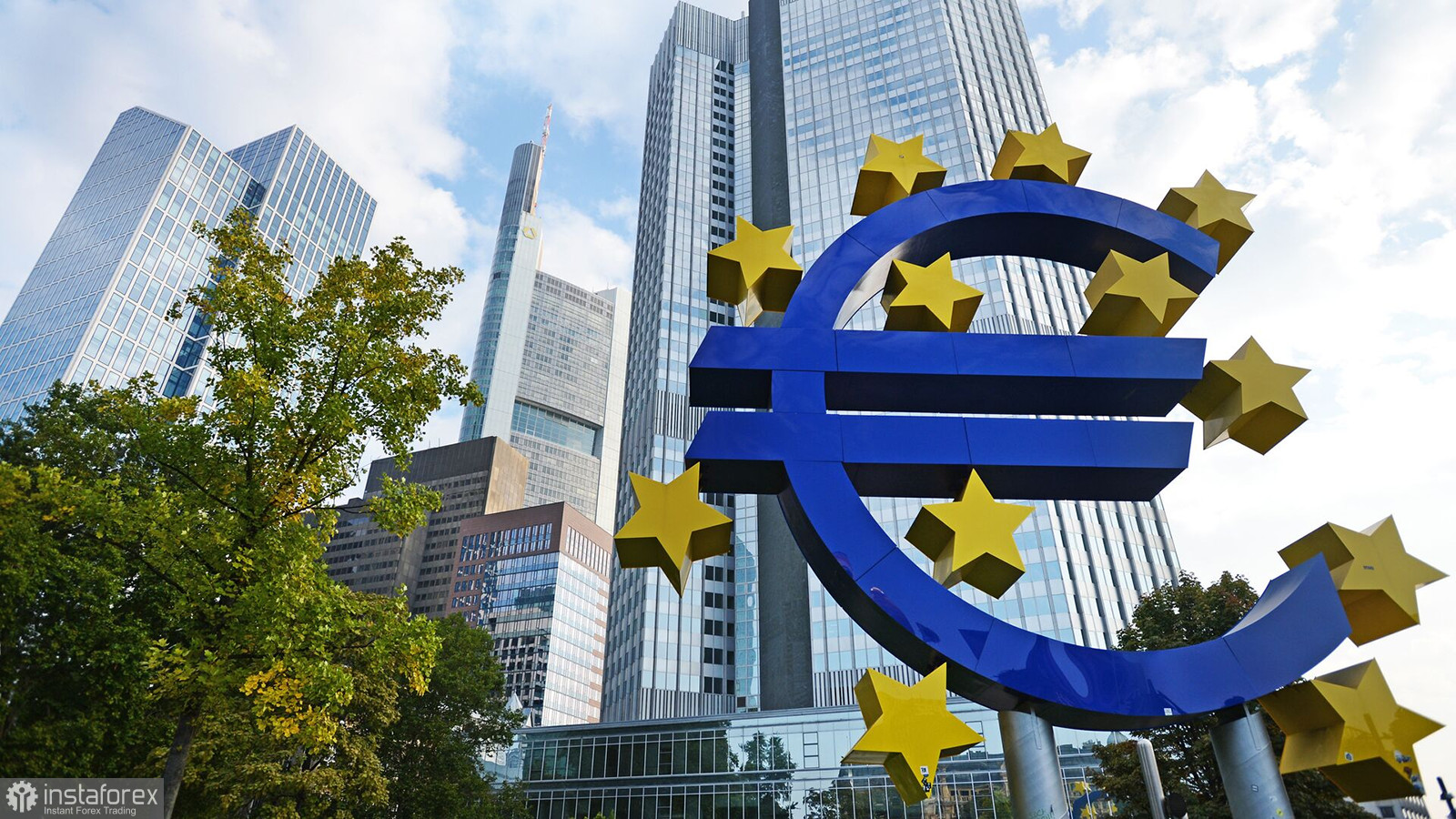
The European Central Bank concluded its March meeting last, but we will review it first. As expected, the ECB has kept interest rates unchanged for the sixth consecutive time, but has significantly downgraded growth forecasts while raising inflation estimates. The ECB now expects inflation to reach 2.6% in 2026, up from 1.9%, 2% in 2027 and 2.1% in 2028. As we can see, inflation is expected to remain elevated only in the current year. If this assumption holds, there will be no need to tighten monetary policy.
However, it is important to note that the conflict in the Middle East can develop in an entirely unpredictable manner, and the current prices for oil and gas may not be the worst nightmare for market participants. If oil prices were to rise to $200 per barrel (as Iran threatens) and the Strait of Hormuz remains blocked amid escalating conflict in the Middle East, inflation could significantly exceed 2.6%. Interestingly, some ECB policymakers have previously considered tightening monetary policy. However, any such tightening would lead to an even greater slowdown in economic growth.
Economic growth is now forecasted at 0.9% for the current year, 1.3% for next year, and 1.4% for 2028. The European economy has displayed extremely weak growth over the past decade, so the ECB will be forced to consider not only inflation rates but also the state of the economy. Additionally, the unemployment rate in the Eurozone is higher than in the UK or the US. Therefore, increasing rates will only push it higher.
Given all of the above, I believe the ECB will maintain the status quo and intervene only if inflation gets out of control, exceeding the projected 2026 range. Regarding the prospects for the euro, they remain murky due to the Middle Eastern conflict. In the near term, I expect a corrective recovery of the euro, but what lies beyond that is quite uncertain. If Donald Trump genuinely attempts to end the war with Iran, it will undoubtedly be a positive development for everyone. However, it will take at least several months to restore the entire damaged infrastructure in the Middle East. A quick stabilization of energy prices is clearly not to be expected.
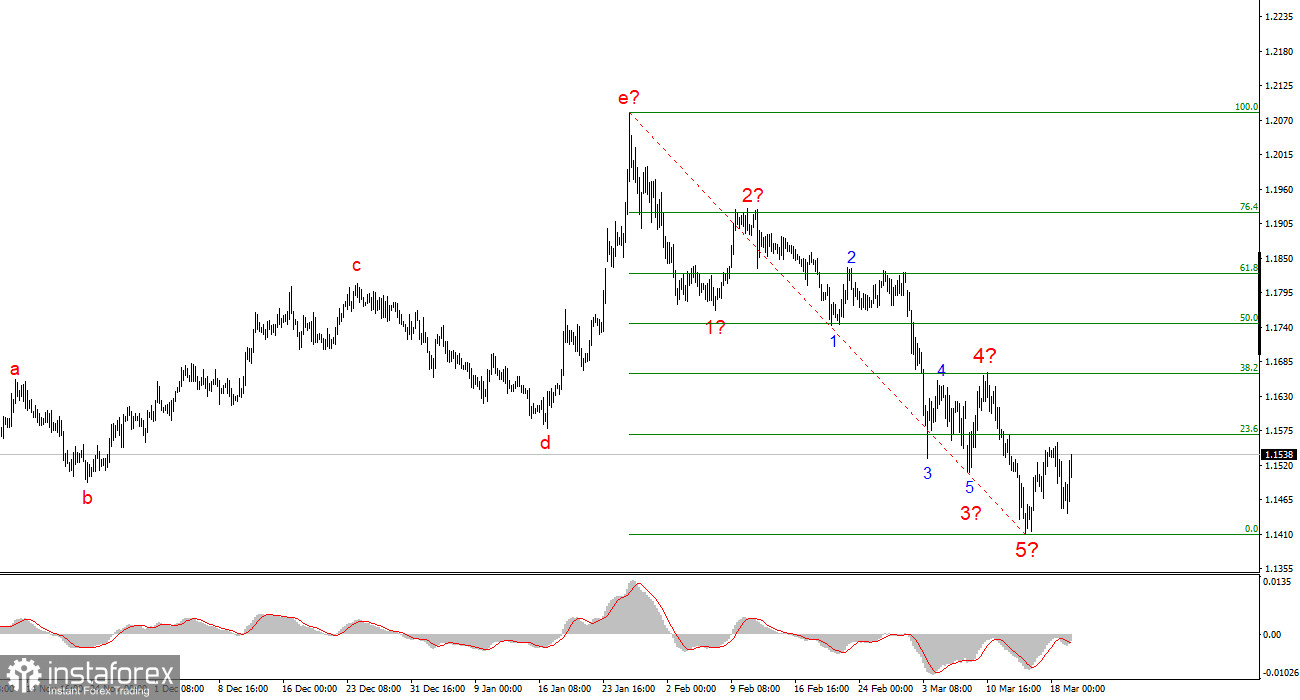
Based on the conducted analysis of EUR/USD, I conclude that the instrument remains within an upward segment of the trend (as shown in the lower image), but in the short term has begun constructing a downward segment. Since the five-wave impulsive structure has completed, my readers can expect price increases over the next week or two, with targets around levels 1.1568 and 1.1666, corresponding to the 23.6% and 38.2% Fibonacci. Further movements of the instrument will primarily depend on events in the Middle East.
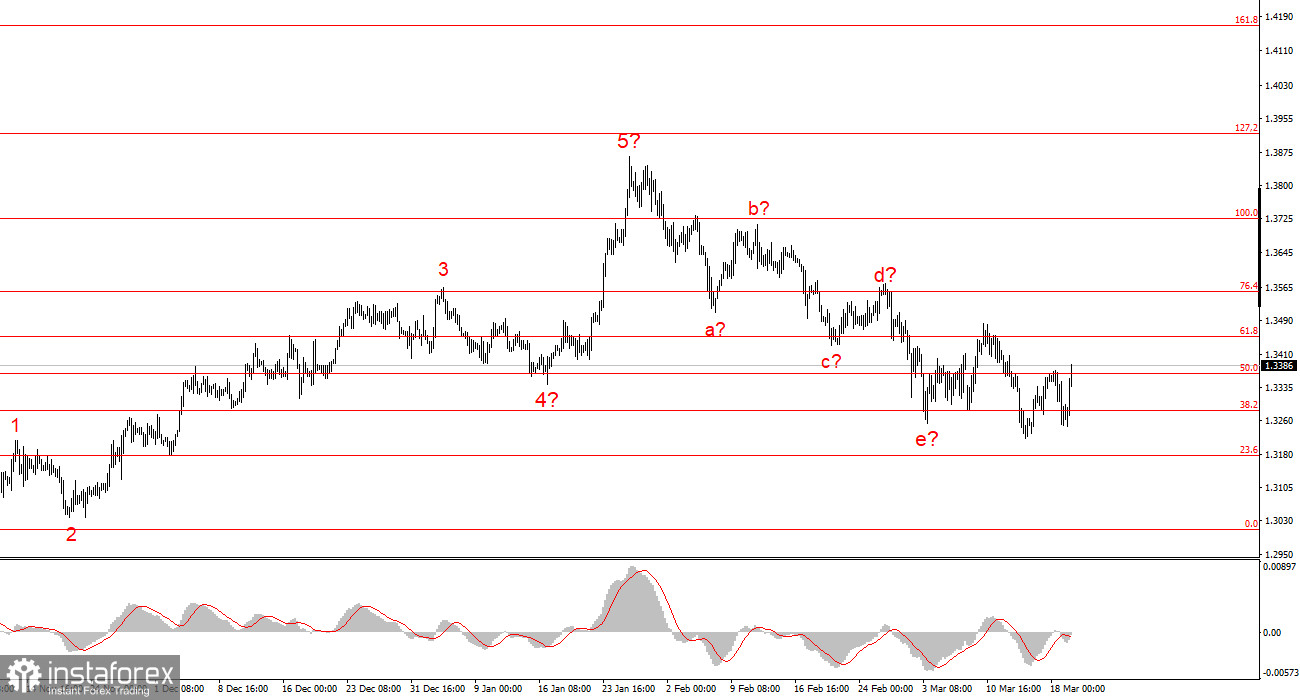
The wave pattern for the GBP/USD instrument has become very complex and difficult to read. We now see a seven-wave downward structure on the charts, which it certainly is not. Most likely, there is an extension or complication within one of the waves. However, this does not clarify the wave analysis. If the wave pattern has once been complicated to an unreadable form, it could complicate again several more times. Therefore, I believe we should focus on the wave analysis of the EUR/USD instrument, which appears much clearer. It is also crucial not to overlook the geopolitical factor, which could send both instruments into a new decline at any moment. If this does not occur, the euro and pound may anticipate growth within the framework of a correction.


